
Search "Tyver review" and every result is written by an affiliate with a signup link in paragraph two. That's not an accident. Tyver is built for the affiliate and dropshipping world, and that world reviews its own tools. If you run paid social for a brand, none of those reviews answer your actual question: is a $79-a-month Facebook ad database the right buy, or do you need something built around the competitors you already know by name?
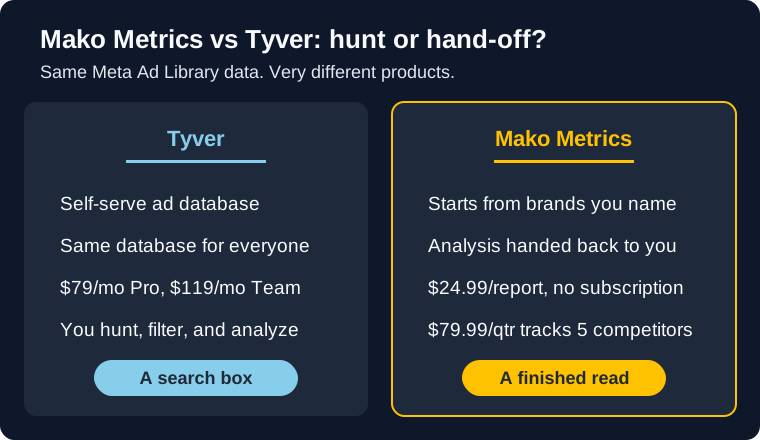
That's the question this mako metrics vs tyver comparison answers. Tyver hands every subscriber the same searchable database and lets you hunt. Mako Metrics starts from the brands you name and hands back the analysis. By the end of this page you'll know which job each tool does well, what each really costs once your hours are counted, and which one fits the decision sitting in front of you.
Bottom line
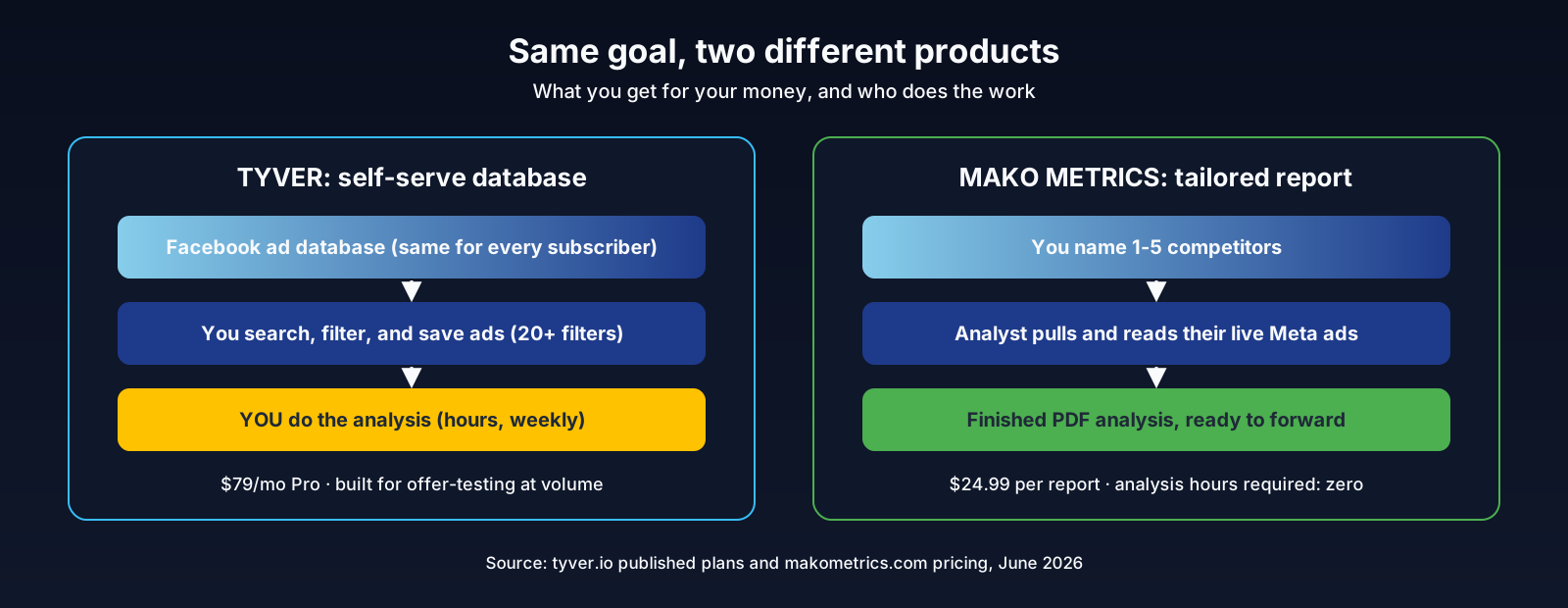
- Tyver: a self-serve Facebook ad spy database claiming 91%+ coverage of live Facebook ads, with 20+ filters and daily updates. Every subscriber gets the same database. You do the analysis.
- Mako Metrics: a done-for-you PDF report on the Meta ads of competitors you name, built from Meta's official Ad Library. The analysis is the product.
- Pricing: Tyver runs free (limited), $79/mo Pro, $119/mo Team. Mako is $24.99 per report or $79.99 per quarter for up to five tracked competitors.
- Data source: both draw on the public Meta Ad Library. You're choosing between a search box over that data and a finished read of it.
- Decision rule: hunting for winning offers across thousands of unknown advertisers? Tyver. Tracking named competitors and want the analysis handed to you? Mako Metrics.
In This Article
TL;DR: The Core Difference
Tyver is a volume tool. It indexes millions of Facebook ads a day behind serious filters, and it serves the same database to every subscriber. What you pull out of it depends entirely on the hours you put in.
Mako Metrics inverts that. You name one to five competitors, and the product is a report scoped to exactly those brands: what they're running, which formats and hooks they lean on, how long their winners have been live, and where the openings are. Nothing in it is generic, because it's built per request.
| Tyver | Mako Metrics | |
|---|---|---|
| Tool type | Self-serve Facebook ad spy database | Done-for-you competitor intelligence report |
| Platform scope | Facebook ads | Meta (Facebook + Instagram) |
| Pricing model | Subscription (free tier, $79/mo Pro, $119/mo Team) | Per report ($24.99) or quarterly ($79.99/qtr) |
| What you get | Search and filter access | A finished PDF analysis |
| Who does the analysis | You do | Done for you |
| Built for | Affiliate media buyers, dropshipping, offer testing at volume | DTC brands and agencies with named competitors |
| Tailored to your competitors? | No; same database for every subscriber | Yes; scoped to the brands you name |
What Is Tyver? (A Fair Review)
Tyver deserves a fairer review than the affiliate ecosystem gives it, in both directions. It's a capable tool, and it's a tool with a clear intended user that most reviews never name.
Where Tyver is strong
Tyver claims coverage of 91%+ of live Facebook ads across 100+ countries, with roughly two million creatives added daily and the database refreshed every day. For a Facebook-only spy database, that freshness matters: a feed updated daily tells you what's running this week, not what ran last spring.
The filters are the standout. Beyond the usual keyword, domain, format, and CTA filters, Tyver has two that competing databases mostly lack. The "In link" filter searches text inside an ad's destination URL, so you can hunt creatives by UTM tag or pixel ID and surface every ad tied to one media-buying team. And for EU-served ads, you can filter by reach, gender, and age. There's also a free tier, so you can confirm the interface fits how you work before paying.
Who Tyver is built for
Read Tyver's own homepage and the verticals it lists: dropshipping, nutra, gambling, apps, sweepstakes, ecommerce. Then look at who reviews it: affiliate marketing blogs, media-buyer communities, proxy-service partners. This is a tool by and for the offer-testing world, where the job is scanning thousands of unknown advertisers daily to spot a winning angle before it saturates.
That's a real job, and Tyver does it well. It's just probably not your job if you're running paid social for a brand with three competitors you could name from memory.
What Is Mako Metrics?
Mako Metrics doesn't give you a database. You name a competitor, an analyst pulls their currently-running ads from Meta's official Ad Library, and you get back a PDF that reads the strategy: creative formats and hook patterns, how long each ad has been running, the offers and CTAs they lean on, and where the gaps are for your next creative round.
The output is built to be forwarded. Strategists, designers, founders, clients: the report works as a brief, not a login. Turnaround is within 24 hours, and it covers Meta only, by design.
If you want to see what that reading looks like on a real brand, our OLIPOP teardown is the same analysis published as a blog post: 66 live ads, the creative mix, the churn pattern, and what a competitor could do about it.
Mako is not a browsing tool. There's no filter bar, no saved searches, no daily feed. If your work depends on scanning high volumes of ads across niches you don't know yet, Tyver is built for that and Mako isn't.
Feature Comparison
The side-by-side, on the dimensions that drive the choice.
| Feature | Tyver | Mako Metrics |
|---|---|---|
| Platforms covered | Meta (Facebook + Instagram) | |
| Data source | Indexed from public Facebook ad data | Pulled per request from the Meta Ad Library |
| Scale model | Claimed 91%+ of live Facebook ads, ~2M added daily | No database; each report scoped to named brands |
| Search and filters | 20+ filters, incl. destination-URL and EU demographic filters | None needed; the analyst does the digging |
| Output | Searchable feed of creatives | Shareable PDF report |
| Analysis included | No | Yes, that's the product |
| Free option | Free tier with limited access | Free sample competitor reports |
| Entry price | $79/mo Pro for full filters | $24.99 per report |
Where the Data Comes From (And Why It Matters)
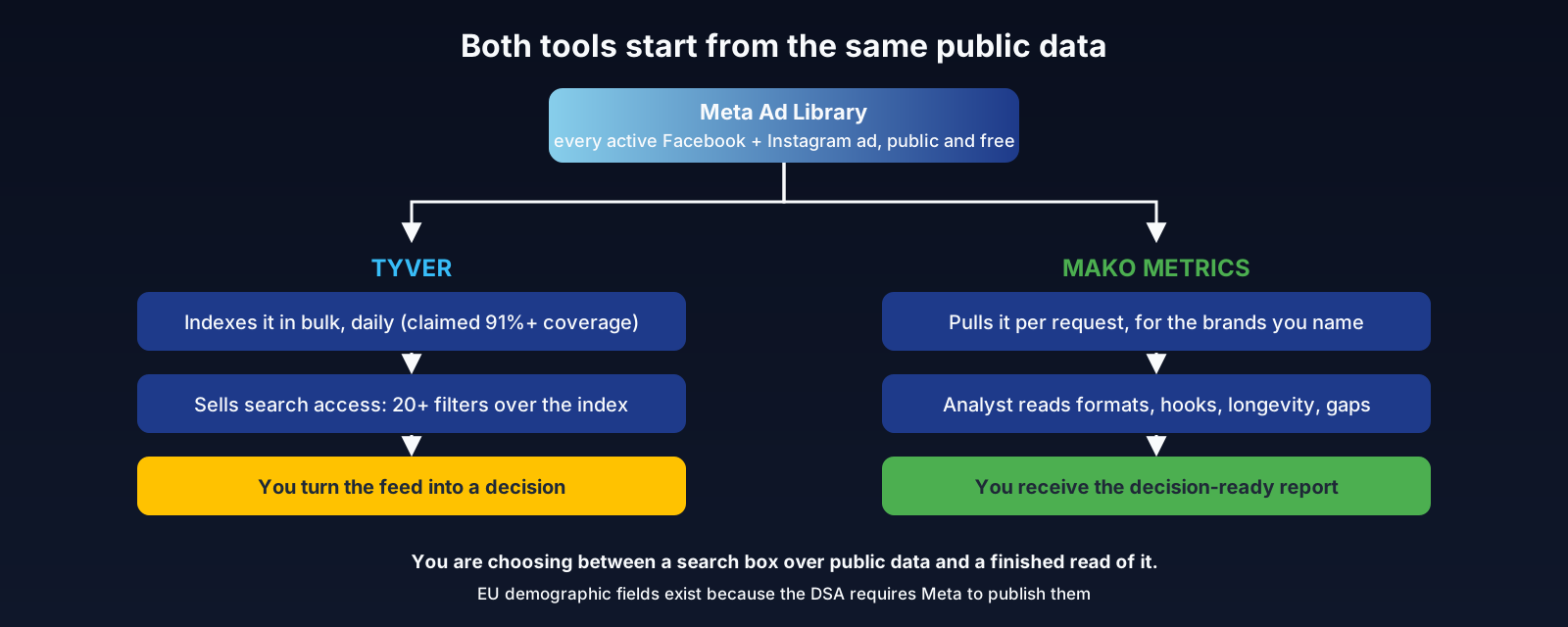
Neither tool owns the data. The affiliate reviews skip this, and it should be the first thing a buyer knows.
Since Meta expanded ad transparency, every active ad on Facebook and Instagram is published in the Meta Ad Library, free, for anyone to search. Tyver's EU demographic filters exist because European law requires Meta to publish reach, age, and gender data for ads served there. The public evidence points to Tyver's engine being large-scale indexing of that public data; its claimed 91% coverage is a measure of how much of Meta's own published feed it manages to capture and keep fresh.
That's not a knock. Bulk indexing plus 20 good filters over public data is a legitimate product, the same way a search engine is a legitimate product built on public web pages. But it changes what you're buying. Tyver's $79 a month buys a faster way to search data you could technically browse for free, rather than access to anything hidden, and the searching is still your shift.
A Mako report draws on the same public source. The difference is what comes back: not a feed to filter, but the filtering, reading, and pattern-spotting already done on the specific brands you care about.
Tyver Pricing vs. What You Actually Pay
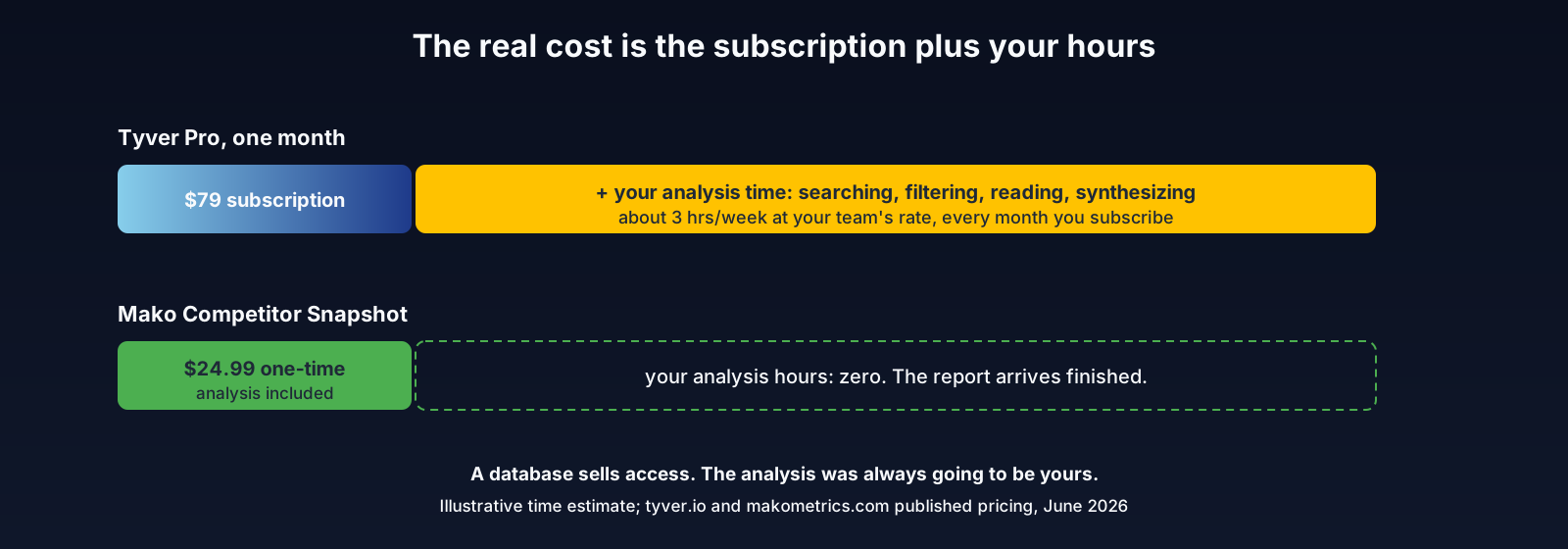
Tyver's sticker prices are simple. Free gets you limited database access. Pro is $79 per month, or $569 billed annually (about $47 a month). Team is $119 per month, or $857 annually. By spy-database standards that's mid-market: pricier than BigSpy's $9 entry, cheaper than AdSpy's $149.
The number that isn't on the pricing page is your time. A database subscription comes with a standing weekly task: run the searches, work the filters, save the ads, and turn a screen of creatives into something your team can act on. Call it three hours a week, modestly. At any reasonable rate for a media buyer's time, the labor costs more than the subscription within the first month. Tyver's pricing is honest about what it sells. It sells access. The analysis was always going to be yours.
Mako prices the other side of that line. The Competitor Snapshot is $24.99, one time, for one analyzed competitor. Market Dominator is $79.99 per quarter for up to five competitors with tracking across the period, and the Agency plan is $149.99 for teams running this across clients. Analysis hours required from you: zero.
| Tyver Free | Tyver Pro | Mako Snapshot | Mako Market Dominator | |
|---|---|---|---|---|
| Price | $0 | $79/mo ($569/yr) | $24.99 one-time | $79.99/quarter |
| What you get | Limited database access | Full database + filters | One analyzed competitor report | Up to 5 competitors + tracking |
| Analysis included? | No | No | Yes | Yes |
Paying $79/mo to do your own digging?
Look at a finished report before you commit to another subscription. Mako's samples show real brands' live Meta ads, already analyzed into the format you'd hand a creative team. Free, no login, takes two minutes.
See Sample ReportsMako Metrics as a Tyver Alternative: Who Should Choose Which
If you're hunting for a Tyver alternative, start by naming which of these two people you are this quarter.
Choose Tyver if…
- You test offers at volume and need to scan advertisers you've never heard of, daily.
- You're in dropshipping, affiliate, or app-install work where spotting an angle a week early decides the quarter.
- You'll use the deep filters weekly: pixel and UTM hunting via the In-link filter, EU demographic cuts.
- You have hours to browse and you trust your own read of a creative feed.
- You want Facebook-specific freshness over multi-platform breadth.
Choose Mako Metrics if…
- You can name your competitors. Two, three, five brands, known by heart. You don't need discovery; you need depth on them.
- You want the analysis done, not a second dashboard to learn and babysit.
- The deliverable matters: you're briefing designers, defending spend to a founder, or walking a client through what their rival is doing.
- Your tool budget should buy answers, not another standing weekly task.
- You'd rather pay $24.99 once than $79 every month you forget to log in.
If that second list reads like your quarter, you don't have to take this page's word for what a report contains. The sample reports are real brands' live Meta ads, already analyzed; skim one and you'll know in two minutes whether this replaces your spy-tool shortlist. No card, no signup.
Where you'd use both
Some agencies run exactly this split: a spy database for top-of-funnel discovery across a niche, and per-client Mako reports as the named-competitor deliverable that goes in front of the client. If that's you, the tools cover different stages of the same workflow. The full landscape of competitor tracking tools maps where each option sits, and if you haven't exhausted the free route yet, work through the seven free ways to spy on competitor Facebook ads first.
The Real Distinction: The Same Database for Everyone vs. Built Around Your Competitors
Every spy database has the same structural limit, and it has nothing to do with coverage percentages. The product is identical for every subscriber. Tyver doesn't know that your three competitors are the brands eating your auction. The dropshipper in the next login over sees the same feed you do. Whatever makes the research yours has to come from you, after you pay.
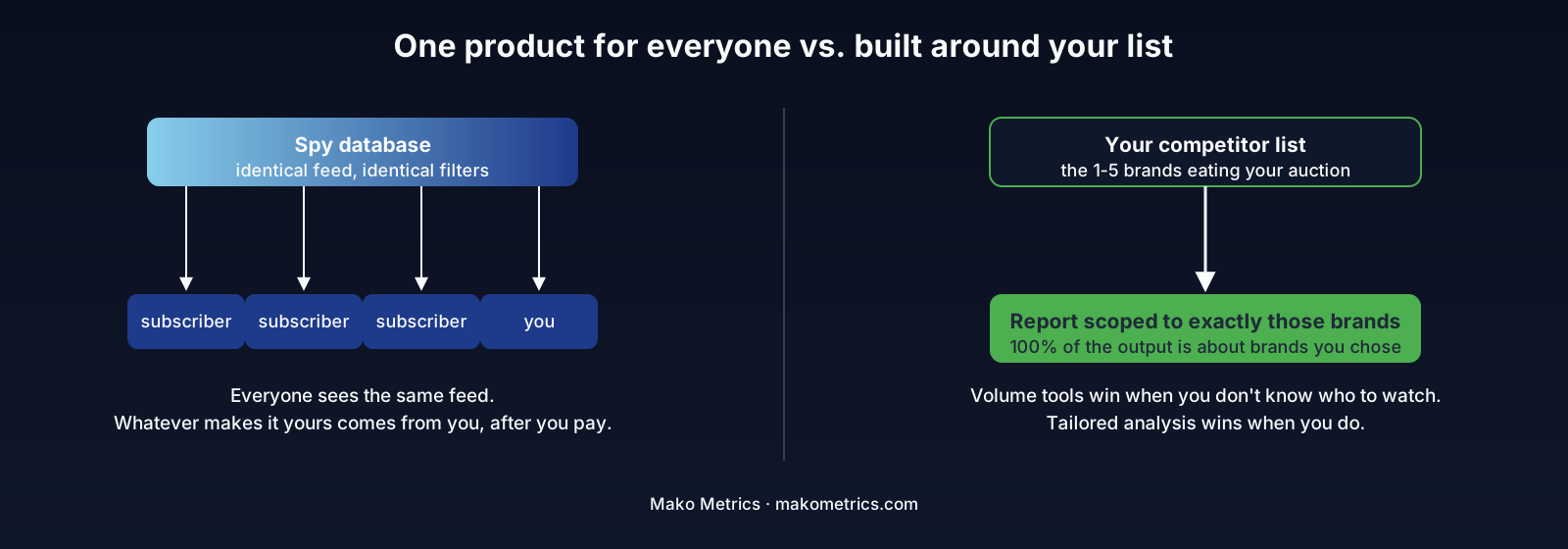
A tailored report flips the starting point. Scope is set by your competitor list, so 100% of the output is about brands you chose. The reading, the longevity patterns, the gaps worth testing into: all of it arrives pointed at your next creative round. You give up the browsing, the filters, and the serendipity of stumbling onto a great unknown advertiser. In exchange, nothing you paid for is about brands you'll never compete with.
Volume tools win when you don't know who to watch. Tailored analysis wins when you do. Most brand-side operators know exactly who to watch, which is why they fall out of love with spy databases around the third month of paying for one.
Frequently Asked Questions
Tyver vs BigSpy: which spy database is better?
They split on depth versus breadth. Tyver is Facebook-only with deeper filters (destination-URL search, EU demographics) and daily freshness. BigSpy covers ten platforms with a billion-ad archive and a $9 entry price, but more of its index is historical. If you need TikTok or Google coverage, BigSpy; if you live in Facebook offer-testing, Tyver. We compared Mako Metrics vs BigSpy separately if you're weighing that one.
Is Tyver free?
Tyver has a free tier with limited database access and basic ad listing info, enough to test the interface. The full filter set, including the In-link and demographic filters that make Tyver distinctive, needs Pro at $79 per month.
Can Mako Metrics replace a spy database?
Only if your research is about named competitors. Mako doesn't do volume discovery; there's no feed to scan for unknown advertisers. If your job is tracking the specific brands in your market, a tailored report replaces the database and the hours behind it. If your job is hunting new offers across niches, it doesn't, and Tyver fits better.
Does Mako Metrics cover TikTok or Google ads?
No. Mako is Meta-only (Facebook and Instagram) by design. That focus is what lets the reports go deep on the formats, hooks, and auction patterns your Meta account runs against. Other channels are context, not the product.
Where do Tyver and Mako Metrics get their data?
Both build on Meta's public ad transparency data: every active Facebook and Instagram ad is published in the Meta Ad Library. Tyver indexes that data at scale and sells search access. Mako pulls it per request and sells the analysis. Neither has private spend, targeting, or performance numbers; nobody outside Meta does.
The bottom line: Tyver is a strong Facebook spy database for the buyer it was built for: media buyers testing offers at volume who want fresh creatives and deep filters, and who bring their own analysis hours. Mako Metrics is for operators with named competitors who want the analysis itself, scoped to their market, in a format they can forward.
If your research starts with "show me everything," subscribe to Tyver. If it starts with three brand names, see Mako's pricing and buy the finished read instead, or order a Competitor Snapshot for $24.99 directly.
Mako Metrics delivers PDF competitor intelligence reports from Meta's official Ad Library. See plans and pricing.