
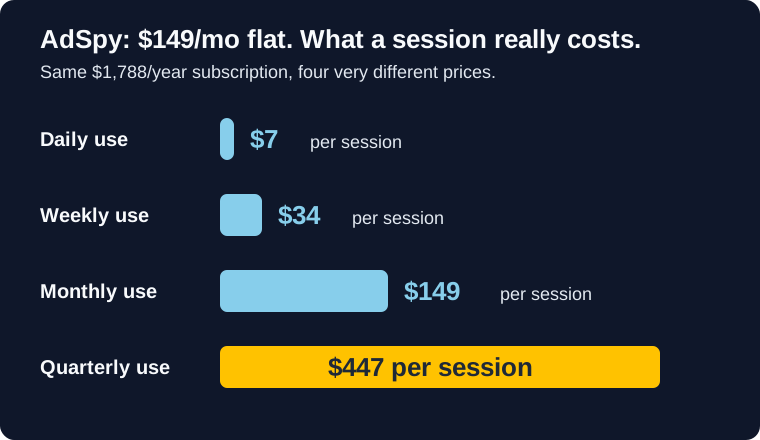
AdSpy is $149 a month. One tier. No annual discount. No cheaper entry point. That's the simple answer.
But $149/month isn't the number that should drive your decision. The number is cost per research session. Once you run that math against your actual usage, the decision gets a lot less abstract.
Bottom line
- AdSpy costs $149/month: single tier, no free trial, no annual plan
- Annual cost is $1,788/year regardless of how often you log in
- At quarterly use, the effective cost per session is $447
- AdSpy is built for daily power users: affiliate marketers and dropshippers hunting trends constantly
- For DTC brands doing structured quarterly competitor analysis, a report-based tool runs $45–$125 per use
In This Article
How Much Does AdSpy Cost?
$149/month, flat. There's no starter tier, no team pricing, no annual billing option.
A promo code, "AFFTWEAKS," gets you 50% off the first month (~$74.50). Worth knowing, because it's everywhere and you might wonder if you're missing a real deal. You're not. Month two is back to $149.
There's no real free trial. AdSpy offers a limited preview of roughly 2,000 ads. That's enough to confirm the interface loads, but not nearly enough to judge whether their database covers your specific market. You're committing to a full month before you know.
Cancellation requires contacting support. No self-service option.
The Real Annual Cost by Usage Frequency
This is where the math gets uncomfortable.
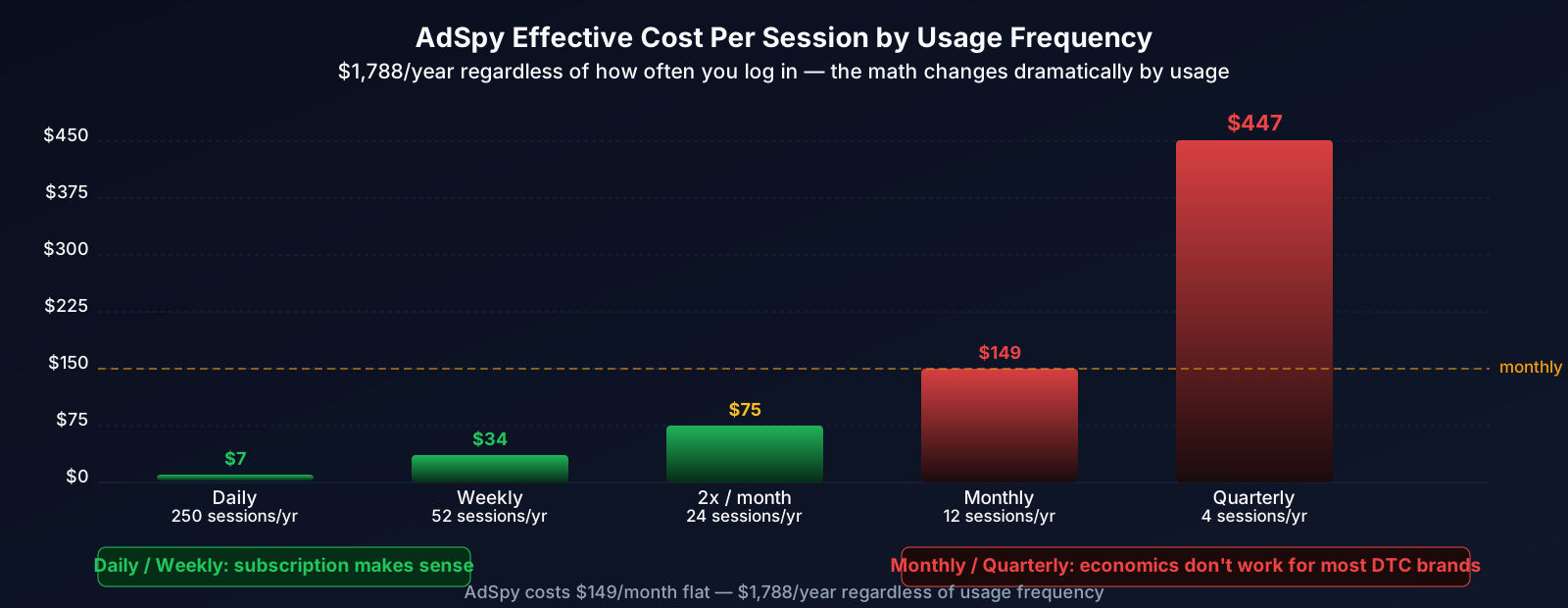
AdSpy's subscription doesn't care how often you use it. You pay $1,788 a year whether you log in 250 times or four. Here's what that works out to per session:
| Usage pattern | Sessions/year | Annual cost | Cost per session |
|---|---|---|---|
| Daily (250 days/year) | 250 | $1,788 | $7.15 |
| Weekly | 52 | $1,788 | $34.38 |
| Twice a month | 24 | $1,788 | $74.50 |
| Monthly | 12 | $1,788 | $149.00 |
| Quarterly | 4 | $1,788 | $447.00 |
A daily user paying $7 per session for real competitive intelligence is a reasonable trade. A DTC founder checking in four times a year is paying $447 per session for the same tool.
The subscription model is built for power users. If you're not one, the economics don't work.
What You're Actually Paying For
Before writing AdSpy off, it's worth being honest about what the tool does well.
What AdSpy does well
The database is large: 200 million+ Facebook and Instagram ads, 29 million advertisers, 88 languages, 225 countries. Independent reviewers who test it hands-on tend to score around 6.6 out of 10, which tracks: real strengths, real gaps.
The comment search is the standout feature. You can search inside the comment sections of ads, which surfaces real customer objections, questions, and buying signals you can't get from the creative alone. I haven't seen another tool do this as cleanly.
Filter depth is solid too. Ad type, engagement thresholds, demographic targeting, date range, affiliate network. For someone doing volume research across many niches, that's a meaningful toolkit.
Where it falls short
It's Facebook and Instagram only. No TikTok, Google Display, YouTube, or Pinterest, despite "AdSpy" sounding broader.
A Capterra reviewer put it plainly: "great software but the price tag is way too high." The 4.3/5 rating comes from only six reviews, but the pricing complaint shows up consistently.
The bigger limitation for research-focused teams is freshness. A significant portion of AdSpy's database is historical. Ads from two years ago show up next to ads running today, with no reliable freshness signal. That's fine for spotting creative trends over time. It's a real problem when you're trying to understand what a specific competitor is actively spending on right now.
And Trustpilot tells a rougher story: 2.4 out of 5 from eight reviews, with 75% being one-star. Charges after cancellation, no support response, unexplained account lockouts. Small sample, but the pattern is consistent enough to factor in.
Who AdSpy Is (and Isn't) Built For
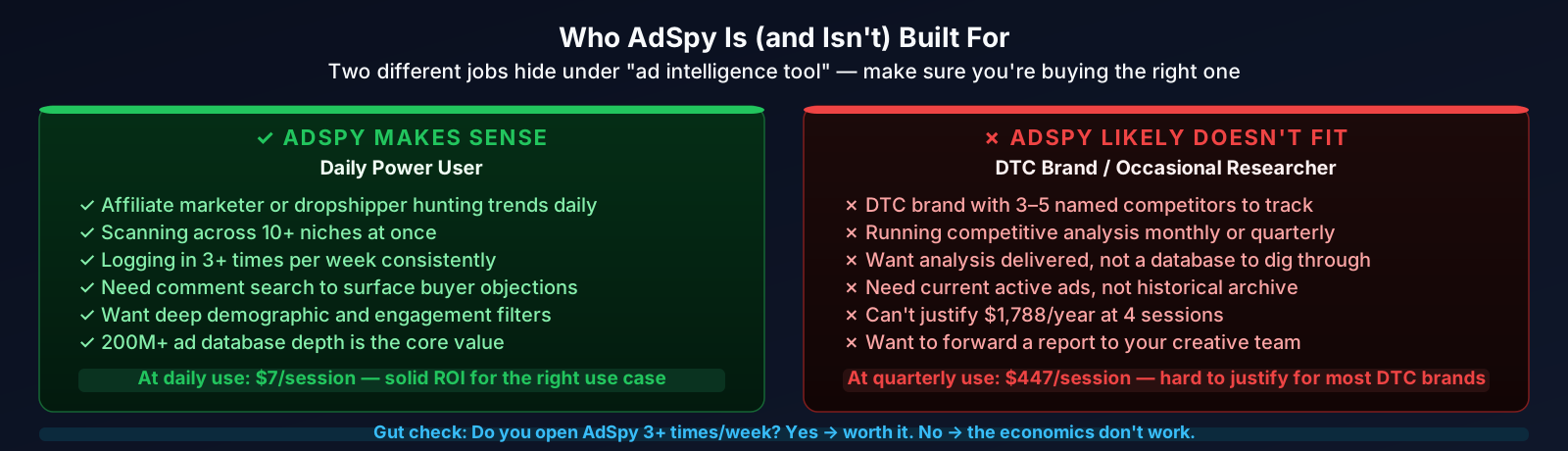
AdSpy was designed for affiliate marketers and dropshippers doing high-volume, cross-niche product hunting. If you need to scan thousands of ads across dozens of niches daily to find what's selling, the database depth and filter system are built for that job.
If you're a DTC brand with three to five identified competitors, running competitive analysis once a quarter to inform your next creative sprint, that's a different job entirely.
The mistake I see most often: brands evaluate AdSpy against their own use case when the tool was built for someone else's. Two very different jobs hide under "ad intelligence tool": daily trend-scouting across many niches, and structured quarterly analysis of specific competitors. The tool that wins at one doesn't necessarily win at both. For the same database-vs-report question on BigSpy specifically, see Mako Metrics vs BigSpy; for the budget end of the database market, see Mako Metrics vs Dropispy.
A Leaner Alternative for Occasional Research
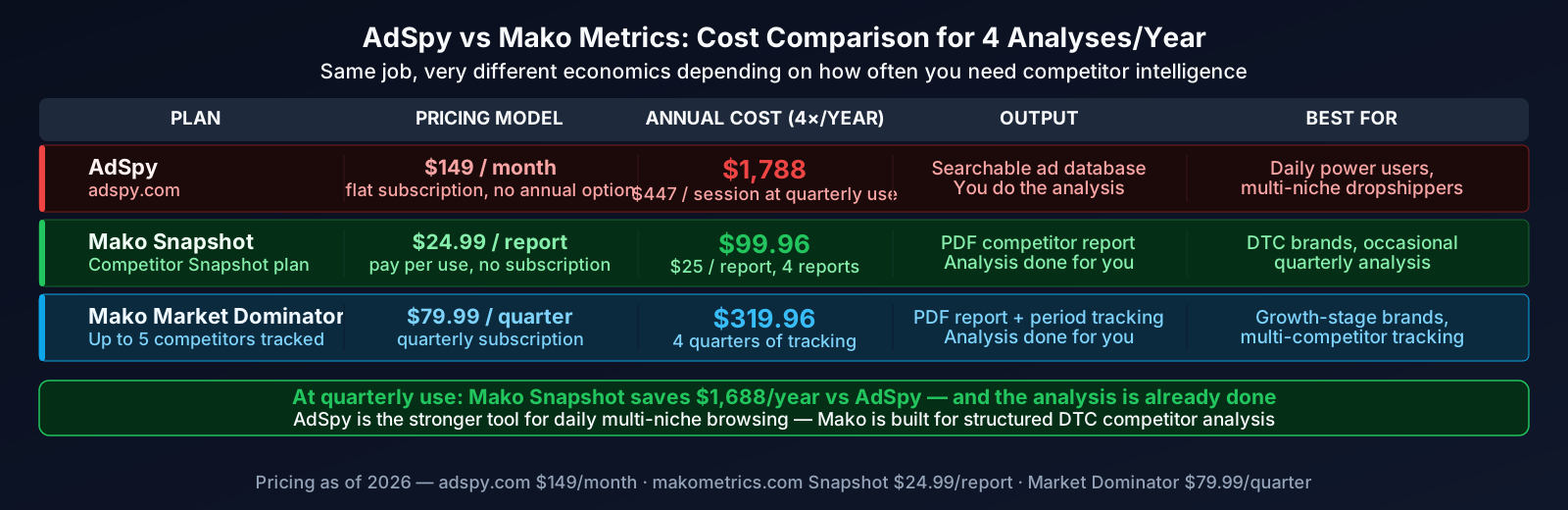
If quarterly or monthly competitor analysis is your actual use case, a report-based model changes the math significantly.
Mako Metrics delivers PDF competitor intelligence reports built from Meta's official Ad Library. The Snapshot plan is $24.99 per report: one competitor, one analysis, no subscription. The Market Dominator plan is $79.99 per quarter and covers up to five competitors with tracking across the period.
The model difference matters: AdSpy gives you a database to dig through yourself. Mako gives you the analysis already done. Not the same product. If you want to browse hundreds of ads and spot patterns manually, Mako isn't the right tool. If you want a structured report you can forward to your creative team or walk into a strategy meeting with, that's the job it's built for.
Here's the cost comparison for a team doing four competitive analyses per year:
| AdSpy | Mako Snapshot | Mako Market Dominator | |
|---|---|---|---|
| Pricing model | $149/month | $24.99/report | $79.99/quarter |
| Annual cost (4x/year) | $1,788 | $99.96 | $319.96 |
| Output | Searchable ad database | PDF report | PDF report + tracking |
| Analysis included | You do it | Done for you | Done for you |
| Platform | Facebook + Instagram | Facebook + Instagram | Facebook + Instagram |
Mako doesn't have a 200M-ad historical database. If browsing at scale across many niches is the actual job, AdSpy is the stronger tool. But for structured quarterly analysis of a handful of named competitors, that cost gap is hard to ignore.
Before committing to either, check what the free Meta Ad Library gives you. It has real gaps: no engagement metrics and inconsistent historical coverage. But for basic competitor browsing, it's free. We've also put together seven free methods for researching competitor Facebook ads worth working through first. If you want a full side-by-side of where AdSpy sits against the rest of the paid tool landscape, we've compared ten Meta ads competitor tracking tools including Mako, Atria, Minea, BigSpy, and others.
Is AdSpy Worth It? Common Questions Answered
Is AdSpy worth it?
Depends entirely on how often you use it. Daily users doing high-volume niche research? Yes, the database depth is hard to match. Teams running competitive analysis monthly or quarterly? At $447 per session, it's hard to justify.
Does AdSpy have a free trial?
No. There's a limited preview of roughly 2,000 ads, but it's not a real trial. You can confirm the interface loads. You won't know if their database covers your market before you've paid for a full month.
Is there a free alternative to AdSpy?
The Meta Ad Library is free and built on the same official Meta transparency data. It is limited: no engagement metrics, no demographic filtering, inconsistent coverage of older ads. But it is the right starting point before paying for anything. Mako Metrics also has free sample competitor reports worth browsing first.
Can you cancel AdSpy easily?
No. There's no self-service cancellation, so you have to contact support. Multiple Trustpilot reviewers report charges after initiating cancellation. Factor that in before you subscribe.
Before you pay $149/month to dig through a database
Browse a finished Mako sample report on a real brand: scorecard, strongest creatives, hook themes, and format mix, pulled from Meta's Ad Library. No subscription, no card. Then order your own competitor for $24.99.
See Sample ReportsWhat to remember
- AdSpy costs $149/month: one tier, no annual discount, no real free trial
- Annual cost is $1,788 regardless of how often you log in
- At quarterly use, cost per session is $447, a bad trade for most DTC brands
- Built for affiliate marketers and dropshippers doing daily, high-volume browsing; if that's not you, it's probably oversized
- Report-based tools like Mako Metrics run $24.99–$79.99 per quarter for teams that need the analysis done, not a database to dig through
- Cancellation requires contacting support; billing complaints are documented on Trustpilot
- Exhaust the free Meta Ad Library before paying for any tool
Mako Metrics delivers PDF competitor intelligence reports from Meta's official Ad Library. See plans and pricing, or order a Competitor Snapshot for $24.99.