
Search for a Dropispy comparison and notice who wrote each result: a rival spy tool with an "alternative" landing page, or an affiliate with a coupon code in paragraph two. All of it is dropshippers talking to dropshippers. If you run paid social for a brand, nobody on page one is answering your actual question: does a winning-product database help you read the three competitors already eating your auction, or is it the wrong shape of tool entirely?
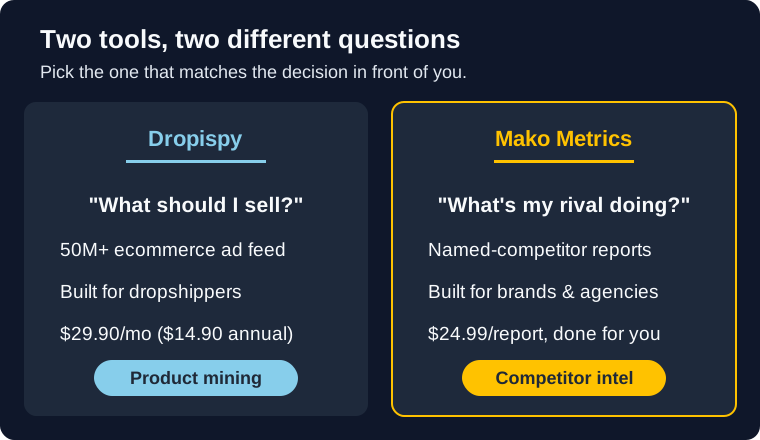
That's the question this mako metrics vs dropispy comparison answers. Dropispy hands every subscriber the same trending-ad feed and asks "what should you sell next?" Mako Metrics starts from the brands you name and answers "what are they running, and what should you do about it?" By the end of this page you'll know which job each tool does well, what each really costs once your hours are counted, and which one fits the decision in front of you.
Bottom line
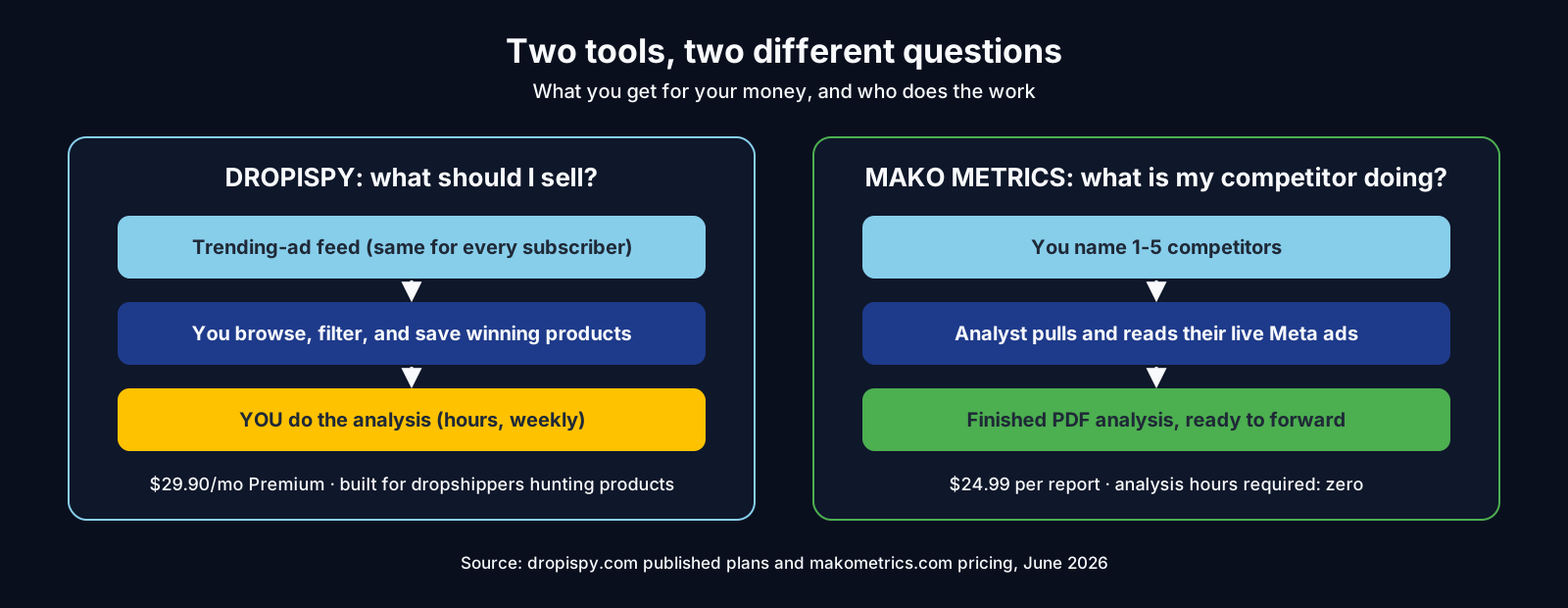
- Dropispy: a self-serve ad spy database built for dropshippers, claiming 50M+ e-commerce ads with 20k+ added daily. Every subscriber gets the same trending feed. You do the analysis.
- Mako Metrics: a done-for-you PDF report on the Meta ads of competitors you name, built from Meta's official Ad Library. The analysis is the product.
- Pricing: Dropispy runs free (basic filters), $29.90/mo Premium ($14.90/mo billed annually), $249.90/mo Business. Mako is $24.99 per report or $79.99 per quarter for up to five tracked competitors.
- The core split: Dropispy answers "what product should I sell?" Mako answers "what is my named competitor doing?"
- Decision rule: hunting products to launch? Dropispy is the cheapest serious option. Tracking named competitors and want the analysis handed to you? Mako Metrics.
In This Article
TL;DR: The Core Difference
Dropispy is a product-hunting tool. It indexes e-commerce ads from Facebook and Instagram, sorts them by engagement and recency, and serves the same feed to every subscriber. The point is discovery: spot a product with momentum before the niche saturates.
Mako Metrics inverts that. You name one to five competitors, and the product is a report scoped to exactly those brands: what they're running, which formats and hooks they lean on, how long their winners have been live, and where the openings are. Nothing in it is generic, because it's built per request.
| Dropispy | Mako Metrics | |
|---|---|---|
| Tool type | Self-serve ad spy database for dropshippers | Done-for-you competitor intelligence report |
| Platform scope | Meta (Facebook + Instagram) | Meta (Facebook + Instagram) |
| Pricing model | Subscription (free tier, $29.90/mo Premium, $249.90/mo Business) | Per report ($24.99) or quarterly ($79.99/qtr) |
| What you get | Search, filters, and a trending-ad feed | A finished PDF analysis |
| Who does the analysis | You do | Done for you |
| Built for | Dropshippers hunting winning products | DTC brands and agencies with named competitors |
| Tailored to your competitors? | No; same feed for every subscriber | Yes; scoped to the brands you name |
What Is Dropispy? (A Fair Review)
Dropispy deserves a more useful review than the coupon pages give it. It's a capable tool with a clearly stated intended user, and that statement is the most important fact on its homepage.
Where Dropispy is strong
Dropispy claims a database of 50M+ e-commerce ads with 20k+ new ads added every day, filterable by keyword, ad format, country, creation date, and engagement. The feed surfaces trending ads sorted by engagement, which is what you want when the job is catching a product on its way up.
It's also the cheapest credible paid option in this category. Premium is $29.90 a month, or $14.90 a month billed annually, a fraction of what AdSpy charges. And the free tier requires no credit card, which almost no competitor matches.
Shop Spy: the feature the others don't have
Beyond the ad database, Dropispy tracks Shopify stores themselves: which stores run the most Facebook ads and what they sell. None of the other spy databases we've compared offers this. For a dropshipper deciding which niche to enter, watching the stores instead of just the ads saves weeks of trial spend.
Who Dropispy is built for
You don't have to infer this one. Dropispy's own tagline is "the No.1 Adspy specially designed for Dropshippers," and its homepage promise is finding winning products. Every feature above serves that goal: trending sort for momentum, engagement filters for social proof, Shop Spy for niche scouting.
For that buyer, the tool earns its price. If you're running paid social for an established brand, though, your job is reading the three competitors you could name from memory, and nothing in Dropispy is shaped for that.
What Is Mako Metrics?
Mako Metrics doesn't give you a database. You name a competitor, an analyst pulls their currently-running ads from Meta's official Ad Library, and you get back a PDF that reads the strategy: creative formats and hook patterns, how long each ad has been running, the offers and CTAs they lean on, and where the gaps are for your next creative round.
The output is built to be forwarded. Strategists, designers, founders, clients: the report works as a brief, not a login. Turnaround is within 24 hours, and it covers Meta only, by design.
If you want to see what that reading looks like on a real brand, our OLIPOP teardown is the same analysis published as a blog post: 66 live ads, the creative mix, the churn pattern, and what a competitor could do about it.
Mako is not a browsing tool. There's no trending feed, no saved searches, no store tracker. If your work depends on discovering products and advertisers you don't know yet, Dropispy is built for that and Mako isn't.
Feature Comparison
If you came here scanning for a Dropispy alternative, this table is the short version.
| Feature | Dropispy | Mako Metrics |
|---|---|---|
| Platforms covered | Meta (Facebook + Instagram) | Meta (Facebook + Instagram) |
| Data source | Indexed from public Meta ad data | Pulled per request from the Meta Ad Library |
| Scale model | Claimed 50M+ e-commerce ads, 20k+ added daily | No database; each report scoped to named brands |
| Search and filters | Keyword, format, country, date, engagement | None needed; the analyst does the digging |
| Store tracking | Shop Spy: Shopify store monitoring | No; brand ad strategy only |
| Output | Trending feed of creatives | Shareable PDF report |
| Analysis included | No | Yes, that's the product |
| Free option | Free tier, no card required | Free sample competitor reports |
| Entry price | $29.90/mo ($14.90/mo annual) | $24.99 per report |
Two Different Questions: What Should I Sell vs. What Is My Competitor Doing
Every feature in Dropispy points at one question: what product should I sell next? Trending sort finds momentum. Engagement filters find social proof. Shop Spy finds which stores are spending. The tool assumes you have no fixed list of rivals, because for a dropshipper the rivals change with every product.
A brand operator's question runs the other way. Your competitor list is short and fixed, and the job is reading their creative strategy: which formats they're scaling, which hooks they repeat, which ads have survived 60 days of spend and which churned in a week. You can type a brand's name into Dropispy's search box and see their ads. But everything that makes those ads useful is still your hours: reading 60 creatives, spotting the patterns, judging longevity, turning it into a brief your designer can use. The search box ends where the actual work begins.
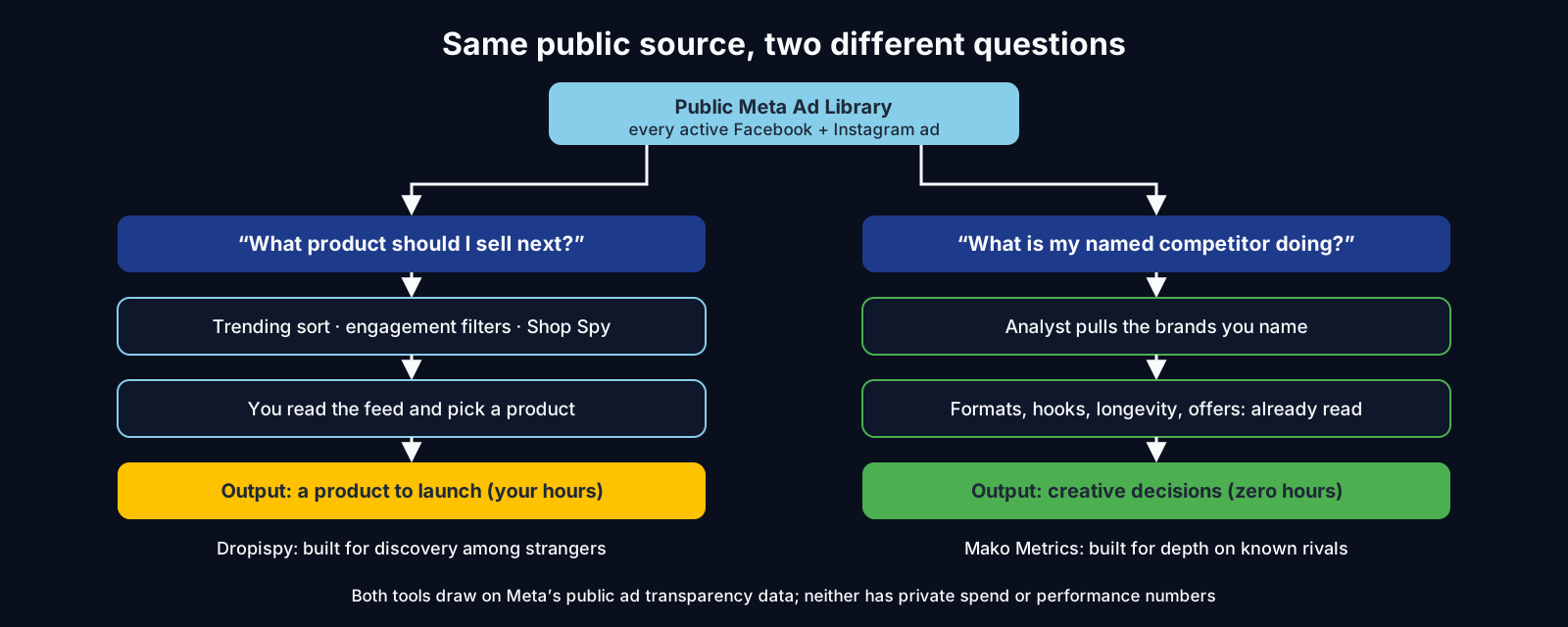
Both tools draw on the same public source. Since Meta expanded ad transparency, every active ad on Facebook and Instagram is published in the Meta Ad Library, free, for anyone to search. Dropispy's value is bulk indexing plus engagement sorting over that public data. A Mako report draws on the same source; the difference is what comes back. Not a feed to filter, but the filtering, reading, and pattern-spotting already done on the specific brands you care about.
Dropispy Pricing vs. What You Actually Pay
Dropispy's sticker prices are the friendliest in the category. The free tier costs nothing and needs no card. Premium is $29.90 per month, dropping to $14.90 a month billed annually. Business is $249.90 per month with a 1.8M monthly credit limit, sized for teams running research at volume.
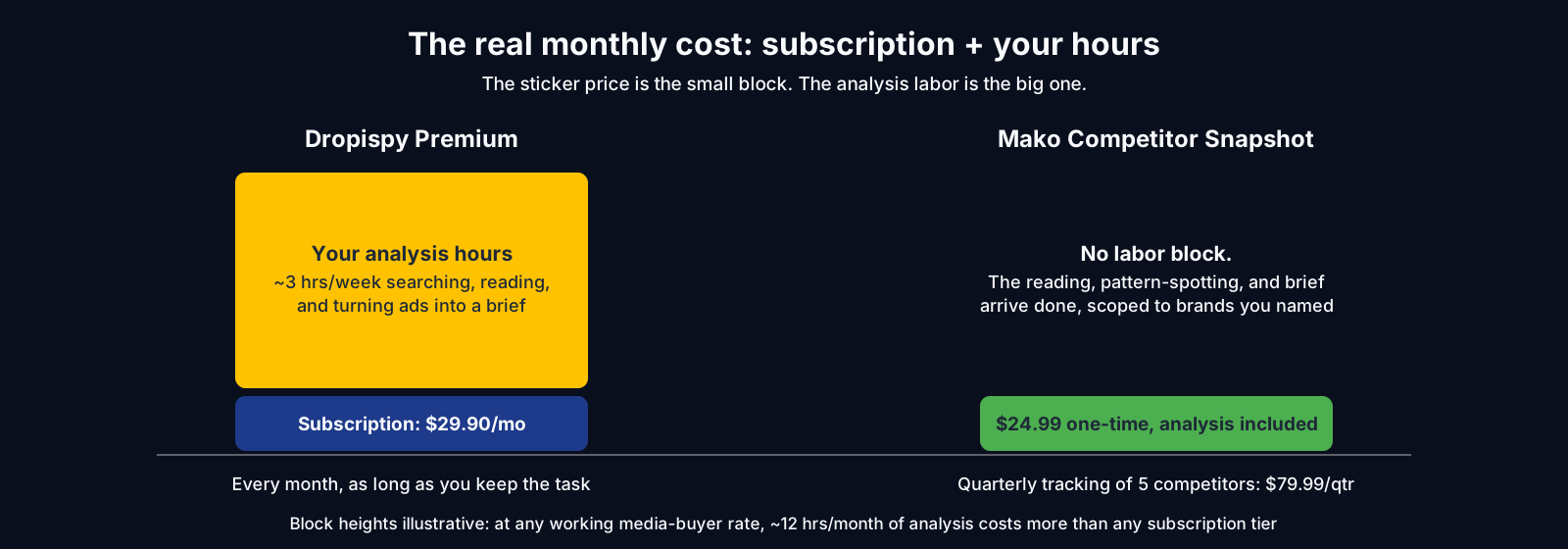
The number that isn't on the pricing page is your time. A database subscription comes with a standing weekly task: run the searches, work the filters, save the ads, and turn a screen of creatives into something your team can act on. Call it three hours a week, modestly. At any reasonable rate for a media buyer's time, the labor passes the subscription cost in the first week, not the first month. That math barely matters at dropshipper scale, where browsing the feed is the job. It matters a lot when competitor research is one task on a list of twenty.
Mako prices the other side of that line. The Competitor Snapshot is $24.99, one time, for one analyzed competitor. Market Dominator is $79.99 per quarter for up to five competitors with tracking across the period, and the Agency plan is $149.99 for teams running this across clients. Analysis hours required from you: zero.
| Dropispy Free | Dropispy Premium | Mako Snapshot | Mako Market Dominator | |
|---|---|---|---|---|
| Price | $0 | $29.90/mo ($14.90/mo annual) | $24.99 one-time | $79.99/quarter |
| What you get | Basic filters, limited access | Advanced filters, audience data, Shop Spy | One analyzed competitor report | Up to 5 competitors + tracking |
| Analysis included? | No | No | Yes | Yes |
Cheap subscription, expensive hours?
Look at a finished report before you sign up to do your own digging. Mako's samples show real brands' live Meta ads, already analyzed into the format you'd hand a creative team. Free, no login, takes two minutes.
See Sample ReportsMako Metrics as a Dropispy Alternative: Who Should Choose Which
If you're weighing a Dropispy alternative, the tool matters less than which buyer you are right now. Read both lists and notice which one describes your week.
Choose Dropispy if…
- You're dropshipping or product-hunting and the next product matters more than any fixed competitor.
- You want trending-ad discovery with engagement counts, daily.
- Shop Spy fits your workflow: scouting which Shopify stores are spending before you enter a niche.
- You have hours to browse and you trust your own read of a creative feed.
- Budget is the constraint and $14.90 a month is the ceiling.
Choose Mako Metrics if…
- You can name your competitors. Two, three, five brands, known by heart. You don't need discovery; you need depth on them.
- You want the analysis done, not a second dashboard to learn and babysit.
- The deliverable matters: you're briefing designers, defending spend to a founder, or walking a client through what their rival is doing.
- Your tool budget should buy answers, not another standing weekly task.
- You'd rather pay $24.99 once than maintain a subscription you log into twice.
If that second list reads like your quarter, you don't have to take this page's word for what a report contains. The sample reports are real brands' live Meta ads, already analyzed; skim one and you'll know in two minutes whether this replaces your spy-tool shortlist. No card, no signup.
Where you'd use both
Some operators straddle the line: launching a new product line while defending an established one. Product-hunt the new line in Dropispy's feed, and commission a Mako read on the rivals attacking your core range. The tools cover different stages of the same workflow. The full landscape of competitor tracking tools maps where each option sits (Dropispy is the budget pick on that list), and if you haven't exhausted the free route yet, work through the seven free ways to spy on competitor Facebook ads first.
The Real Distinction: A Feed for Everyone vs. A Report Built Around Your Competitors
Every spy database has the same structural limit, and it has nothing to do with database size. The product is identical for every subscriber. Dropispy doesn't know which three brands keep outbidding you on your own audience. The dropshipper in the next login over sees the same trending feed you do. Whatever makes the research yours has to come from you, after you pay.
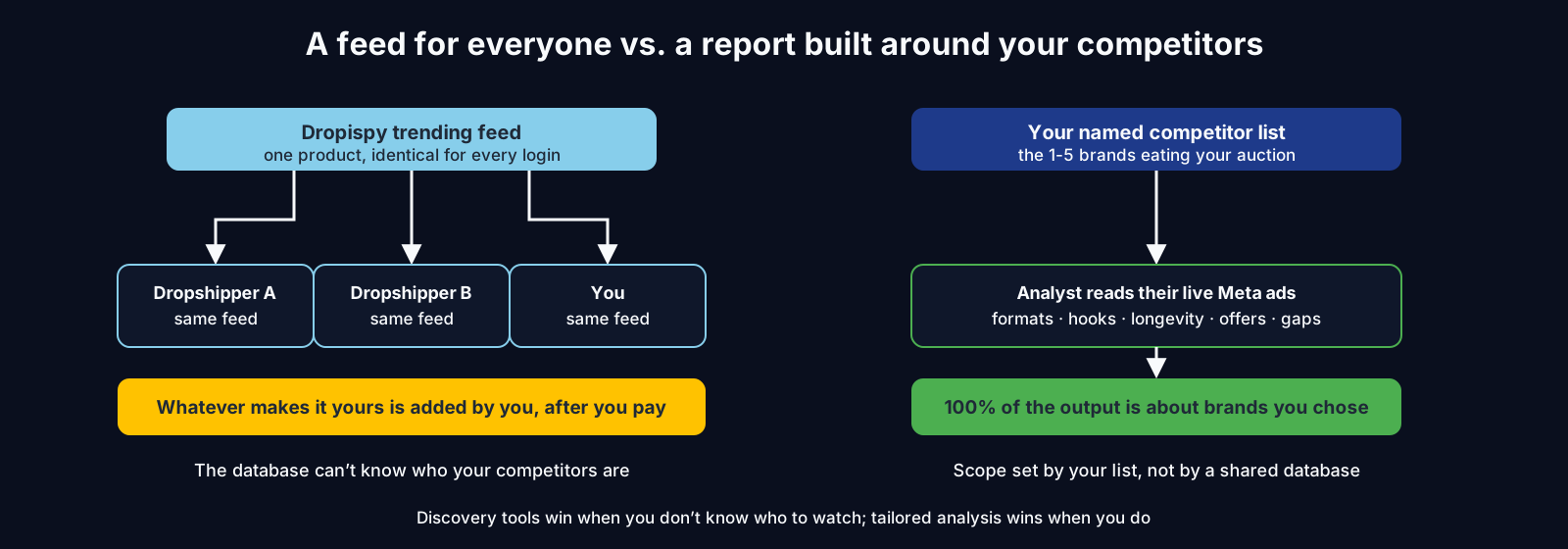
A tailored report flips the starting point. Scope is set by your competitor list, so 100% of the output is about brands you chose. The reading, the longevity patterns, the gaps worth testing into: all of it arrives pointed at your next creative round. You give up the browsing, the trending sort, and the chance of stumbling onto a product with momentum. In exchange, nothing you paid for is about sellers you'll never compete with.
Discovery tools win when you don't know who to watch. Tailored analysis wins when you do. Dropispy's own positioning agrees: it says "designed for Dropshippers" on the front page, and dropshippers don't have fixed competitors. Brands do.
Frequently Asked Questions
Dropispy vs AdSpy: which ad spy tool is better?
They split on price versus breadth. Dropispy is the budget pick: $29.90 a month (or $14.90 annual), Meta-only, with dropshipper-focused filters and Shop Spy. AdSpy runs $149 a month for a larger multi-country Facebook and Instagram archive with deeper search operators. Either way you're buying access, not analysis; you do the reading yourself with both.
Is Dropispy free?
Yes. Dropispy's free tier needs no credit card and includes basic filters and ad browsing, enough to test the interface. Advanced filters, audience metrics, and Shop Spy need Premium at $29.90 per month, or $14.90 a month billed annually.
Can Mako Metrics replace a spy database?
Only if your research is about named competitors. Mako doesn't do volume discovery; there's no feed to scan for trending products. If your job is tracking the specific brands in your market, a tailored report replaces the database and the hours behind it. If your job is hunting products to launch, it doesn't, and Dropispy fits better.
Does Mako Metrics cover TikTok or Google ads?
No. Mako is Meta-only (Facebook and Instagram) by design, the same scope as Dropispy. The difference between the two is who turns the raw ads into a decision.
Where do Dropispy and Mako Metrics get their data?
Both build on Meta's public ad transparency data: every active Facebook and Instagram ad is published in the Meta Ad Library. Dropispy indexes that data at scale and sells search access with engagement sorting. Mako pulls it per request and sells the analysis. Neither has private spend, targeting, or performance numbers; nobody outside Meta does.
The bottom line: Dropispy is a fair-priced product-hunting database for the buyer it was built for: dropshippers scanning trending ads and Shopify stores for the next thing to sell, who bring their own hours. Mako Metrics is for operators with named competitors who want the analysis itself, scoped to their market, in a format they can forward.
If your research starts with "what should I sell?", take Dropispy's free tier for a spin. If it starts with three brand names, see Mako's pricing and buy the finished read instead, or order a Competitor Snapshot for $24.99 directly.
Mako Metrics delivers PDF competitor intelligence reports from Meta's official Ad Library. See plans and pricing.