
Your VP asks what Q3 needs. You can't answer "somewhere between $0.62 and $3.77 per click" and walk away with budget approval. They want a number that survives the planning doc, holds up under a defended-spend review, and lets you quote a client without overpromising.
This post gives you the 2026 Facebook and Meta ads cost benchmarks (CPC, CPM, CPA) by industry, the seasonal math you actually need, and a budget formula that ties to your margin. Meta runs the same auction whether you call it Facebook ads or Meta ads, so the benchmarks below apply across both names and across Facebook plus Instagram placements. Pair this with our ROAS benchmarks when you need the return side of the same picture.
Bottom line
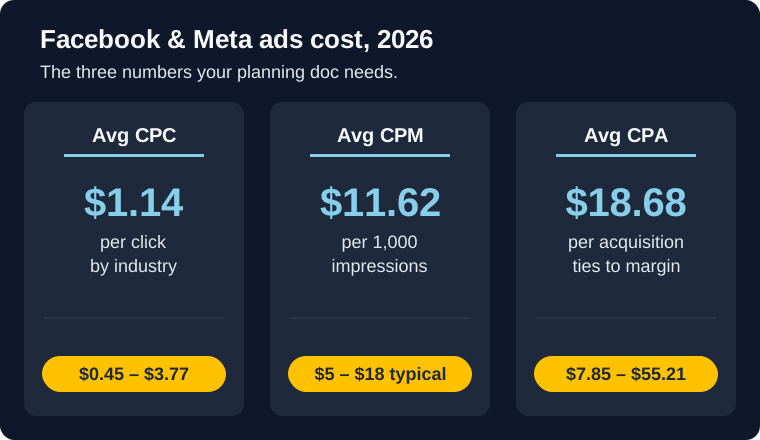
- Overall CPC: $0.62–$1.14 average. By industry, $0.45 (Apparel) to $3.77 (Finance).
- Overall CPM: $11.62 average ($5–$18 typical). Placement choice swings this 2.5x.
- Overall CPA: $18.68 average ($7.85–$55.21 by industry). Ecommerce sits at $45, fitness at $13.
- Q4 CPMs run 15–40% above annual average. BFCM week alone can hit 2x baseline.
- Budget formula: Monthly Budget = Target Sales × Target CPA. Add 20–30% for testing.
2026 Facebook & Meta Ads Cost at a Glance
If you came here for a number to drop into a planning doc, start with this table. The deeper sections explain why your account will land at a different point in each range.
| Metric | 2026 Average | Typical Range |
|---|---|---|
| Cost Per Click (CPC) | $0.62–$1.14 | $0.45 (Apparel) to $3.77 (Finance) |
| Cost Per 1,000 Impressions (CPM) | $11.62 | $5–$18 |
| Cost Per Lead (CPL) | $10.17 | $10–$50+ |
| Cost Per Acquisition (CPA) | $18.68 | $7.85 (Education) to $55.21 (Technology) |
Data: Stackmatix 2026 Facebook Ads CPC Benchmarks (published March 9, 2026), corroborated by Neal Schaffer's 2026 Facebook Ads Cost report.
The wider range is the real story. A $0.45 CPC in apparel and a $3.77 CPC in finance are both normal. Both can be profitable or wasteful depending on your margin and conversion rate. Treat the averages as the midpoint and read your industry row below before setting a number you'll defend.
How Facebook and Meta Ads Pricing Works
Facebook and Meta refer to the same ad system. When you buy a Facebook ad, you're buying inventory inside Meta's auction across Facebook, Instagram, Messenger, and Audience Network. The cost benchmarks in this post apply to both names.
Meta runs an auction-based system. Every time someone scrolls their feed, an auction fires. Advertisers compete on bid amount, estimated action rate, and ad quality. You're not just bidding against other brands in your industry. You're bidding against every advertiser targeting that person.
That has four practical consequences for what you pay:
- Audience competition: more advertisers chasing your audience means higher costs. Finance and insurance CPCs run 8x apparel because banks, lenders, and insurers all bid aggressively on the same people.
- Ad quality and relevance: Meta rewards ads people engage with. Higher relevance scores mean lower costs. A great ad can cost half as much as a mediocre one for the same audience.
- Placement: Feed inventory costs more than Audience Network. Reels still costs less than Feed in 2026, though that gap is closing as Reels inventory fills up.
- Time of year: Q4 costs jump because ecommerce floods the auction. January drops because everyone pulls back post-holiday.
CPC vs CPM vs CPA: Which Lever Moves Which
These three metrics get confused constantly, and the confusion costs money. Each one answers a different operator question.
- CPC (Cost Per Click): what you pay each time someone clicks your ad. Use it to read traffic and awareness diagnostics. Inside Ads Manager this maps to the "Cost per Link Click" column.
- CPM (Cost Per 1,000 Impressions): what you pay to reach 1,000 people. Use it to read audience competition and placement pressure. CPM is the cleanest signal that your costs are moving because the auction got more crowded, not because your creative broke.
- CPA (Cost Per Acquisition): what you pay per conversion (purchase, lead, signup). Use it to defend a budget, scale a campaign, or pitch a client. CPA is the only metric in the three that ties directly to margin.
Here's the practical rule: CPC and CPM are inputs. CPA is the output your CFO actually cares about. A $3.00 CPC that converts at 5% gives you a $60 CPA. A $1.00 CPC that converts at 1% gives you a $100 CPA. The "cheap" click costs more per sale. Always work backwards from CPA.
Calibration note: the averages below represent medians across thousands of accounts. Your costs vary with targeting, creative quality, landing page experience, and competition in your specific niche. Use benchmarks to calibrate expectations, not as exact targets. If your CPC is 20% above industry average, that's not automatically a problem. Check your CPA and ROAS first.
Average CPC by Industry (2026)
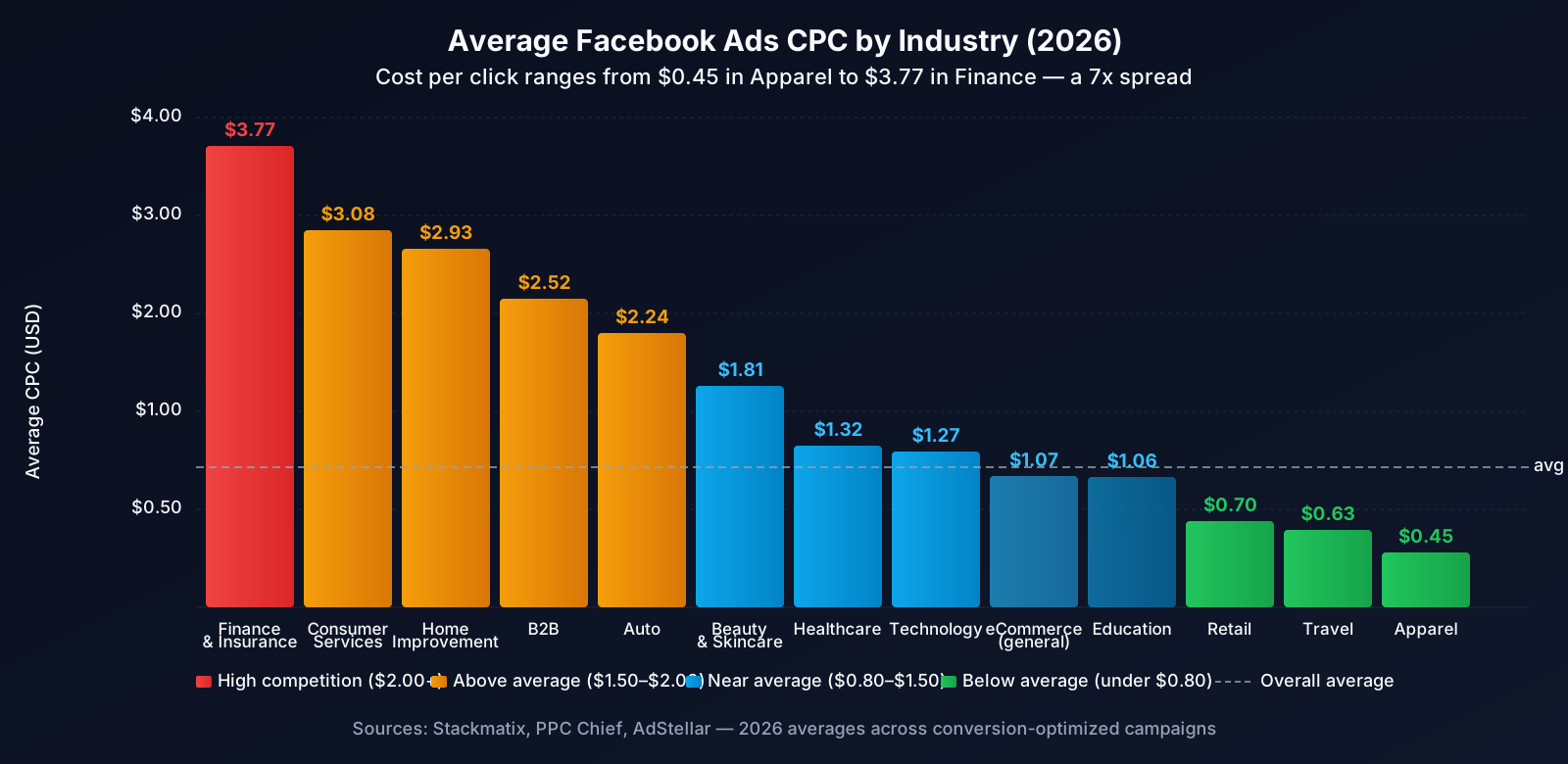
The full 2026 CPC table from Stackmatix, aggregated from Cropink, Neal Schaffer, and Ninja Promo:
| Industry | Average CPC (2026) | Competition |
|---|---|---|
| Finance & Insurance | $3.77 | Very High |
| Consumer Services | $3.08 | Very High |
| Home Improvement | $2.93 | High |
| Employment & Job Training | $2.72 | High |
| B2B | $2.52 | High |
| Auto | $2.24 | High |
| Industrial Services | $2.14 | High |
| Lead Generation (general) | $1.92 | High |
| Fitness | $1.90 | Moderate |
| Beauty | $1.81 | Moderate |
| Legal | $1.81 | Moderate |
| Real Estate | $1.81 | Moderate |
| Healthcare | $1.32 | Moderate |
| Technology | $1.27 | Moderate |
| eCommerce | $1.07 | Moderate |
| Education | $1.06 | Moderate |
| Retail | $0.70 | Low |
| Travel & Hospitality | $0.63 | Low |
| Apparel | $0.45 | Low |
| Automotive (Awareness campaigns) | $0.45 | Low |
Overall average: $0.62–$1.14 CPC depending on data source and campaign mix.
A few things jump out:
Finance is expensive for a reason. A single mortgage lead can be worth $5,000 in revenue. Insurers pay $3.77 per click because one conversion can generate $2,000 a year in premiums. High CPC here means high customer value, and the auction prices that in.
Apparel and retail look cheap, but margins are thin. A $0.45 CPC reads great until you remember you're selling $30 t-shirts at 40% margin. Your CPA needs to stay under about $12 to be profitable, which only works at a solid conversion rate.
eCommerce at $1.07 is the right benchmark for most DTC brands. Above $1.50 your ad relevance or audience targeting may need work. Below $0.80 you're either doing well or your audience is too broad to convert. Look at CPA before you celebrate.
We've seen brands celebrate a 30% CPC drop only to discover their CPA went up because the cheaper clicks came from lower-intent audiences. If you're running conversion campaigns, optimize for CPA or ROAS, not CPC. Let Meta find the people most likely to buy, even if each click costs more.
Average Meta Ads CPM by Industry & Placement (2026)
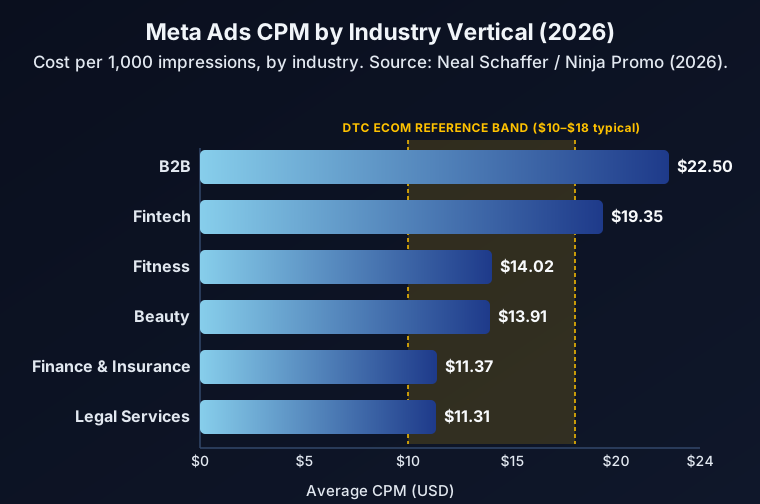
CPM varies more than CPC because it reflects placement choice plus audience competition. Here's what 2026 looks like by vertical, per Neal Schaffer's industry breakdown citing Ninja Promo data:
Meta Ads CPM by Industry
| Industry | Average CPM (2026) |
|---|---|
| B2B | $22.50 |
| Fintech | $19.35 |
| Fitness | $14.02 |
| Beauty | $13.91 |
| Finance & Insurance | $11.37 |
| Legal Services | $11.31 |
A few vertical reads:
DTC ecommerce runs $10–$18 CPM in practice. Apparel and food/beverage trend toward the lower end; supplements, beauty, and home goods cluster at $13–$15 (matching the Beauty $13.91 row). Use the Beauty row as your starting reference if you sell DTC.
SaaS and B2B technical products run at the higher end of the B2B row (often $22+ CPM). The audience pool is smaller and more contested. If you target ICP-fit decision makers via job-title or company-attribute layers, expect CPMs that look much closer to the Fintech $19.35 row than the eCommerce range.
Services (legal, financial advisory, agencies) run $11–$15 CPM, but the conversion-rate ceiling is lower than ecommerce, which pushes the effective CPA up.
Meta Ads CPM by Placement
Placement choice swings CPM more than industry does. The 2026 placement numbers per Stackmatix, sourced to SocialRails:
| Placement | Average CPM | CPC Impact |
|---|---|---|
| Instagram Feed | $9–$12 | Higher CPC |
| Facebook Feed | $7–$10 | Moderate CPC |
| Instagram Stories | $6–$9 | Lower CPC |
| Facebook Stories | $5–$8 | Lower CPC |
| Reels | $5–$7 | Lower CPC |
| Audience Network | $2–$4 | Lowest CPC |
Reels still has the price advantage in 2026, but the gap is narrowing. Meta has spent two years pushing Reels and seeding inventory. Advertisers followed. The $5–$7 CPM holds today, but if you saw $3–$4 Reels CPMs in 2024, those days are gone. Test Reels because it's cheaper than Feed and because vertical video is now the format Meta optimizes hardest for. The cheap impression only helps if the creative works for that format.
Audience Network is cheap for a reason. I generally recommend skipping it for conversion campaigns. Traffic quality runs noticeably lower. For awareness at scale it can work. For purchases, stick to Feed, Stories, and Reels.
Why CPM Matters for Awareness Campaigns
If your goal is reach (not direct conversions), CPM is your primary cost metric. You're paying for impressions, not clicks. A $6 CPM on Stories reaches 1,000 people for $6. A $14 CPM on Facebook Feed reaches the same 1,000 people for $14. For top-of-funnel campaigns feeding your retargeting audiences, cheaper CPMs mean more reach per dollar.
Average CPA by Industry (2026)
CPA is where cost translates to business impact. Numbers below are from Neal Schaffer's 2026 report (Ninja Promo data), with the overall range corroborated by Stackmatix.
CPA by Industry
| Industry | Average CPA |
|---|---|
| Technology | $55.21 |
| eCommerce | $45.00 |
| Automotive | $43.84 |
| Finance & Insurance | $41.43 |
| Fintech | $40.00 |
| Fitness | $13.29 |
| Education | $7.85 |
Overall 2026 CPA average: $18.68. Range: $7.85–$55.21.
The Formula That Ties Everything Together
CPA = CPC ÷ Conversion Rate
A finance company paying $3.77 CPC at a 5% conversion rate has a $75 CPA. An apparel brand paying $0.45 CPC at a 1.5% conversion rate has a $30 CPA. The brand with the lower CPC has the higher CPA relative to revenue.
This is why I always say: fix your conversion rate before worrying about CPC. A landing page that converts 1% better saves more than any bid-strategy tweak. Studying what your competitors are doing with landing pages and offers tends to surface angles you haven't tried.
Lead Gen and App Install CPA (Estimates)
Specific 2026 lead-gen and app-install CPA tables aren't well-documented in primary sources. The ranges below reflect aggregated agency reporting rather than a single benchmark study, so treat them as starting points, not gospel.
| Vertical | Estimated CPA (Lead) |
|---|---|
| Education | $12–$35 |
| Real Estate | $15–$45 |
| Home Improvement | $20–$55 |
| Healthcare | $25–$60 |
| Finance & Insurance | $30–$75 |
| B2B / SaaS | $35–$90 |
| Vertical | Estimated CPA (App Install) |
|---|---|
| Gaming | $1.50–$5.00 |
| eCommerce apps | $3.00–$8.00 |
| Health & Fitness | $2.50–$7.00 |
| Fintech | $5.00–$15.00 |
Cost by Campaign Objective
The campaign objective you choose directly affects what you pay and who sees your ads. Meta optimizes for exactly what you tell it to.
| Objective | Typical CPC Range | Best For |
|---|---|---|
| Traffic | $0.50–$0.70 | Website visits, content promotion |
| Engagement | $0.30–$0.60 | Post interactions, page likes |
| Video Views | $0.01–$0.05 | Brand awareness, storytelling |
| Lead Generation | $1.50–$2.50 | Email signups, form submissions |
| Conversions | $1.00–$3.00 | Sales, signups, purchases |
| App Installs | $0.50–$5.00 | Mobile app downloads |
Data: Stackmatix 2026, aggregating WordStream and Super Ads.
Here's the counterintuitive part: conversion campaigns have the highest CPC and often the lowest CPA. Meta shows your ad to people who actually buy things, not people who click on everything. Paying $2.00 per click to someone with purchase intent beats $0.50 per click to a serial browser.
I see this mistake constantly. Advertisers run traffic campaigns to "get cheaper clicks," then wonder why nobody converts. You're training Meta to find clickers, not buyers. If you want sales, run a sales campaign. The CPC will be higher. The CPA will be lower. That's the trade-off, and it's worth it.
If an agency pitches you on "reducing your CPC by 40%," ask what happened to CPA and ROAS. I've watched accounts where CPC dropped hard after switching to a traffic objective, then cost per purchase doubled. Meta found cheaper clicks, from people who don't buy. Always tie performance back to conversions.
Cost by Placement
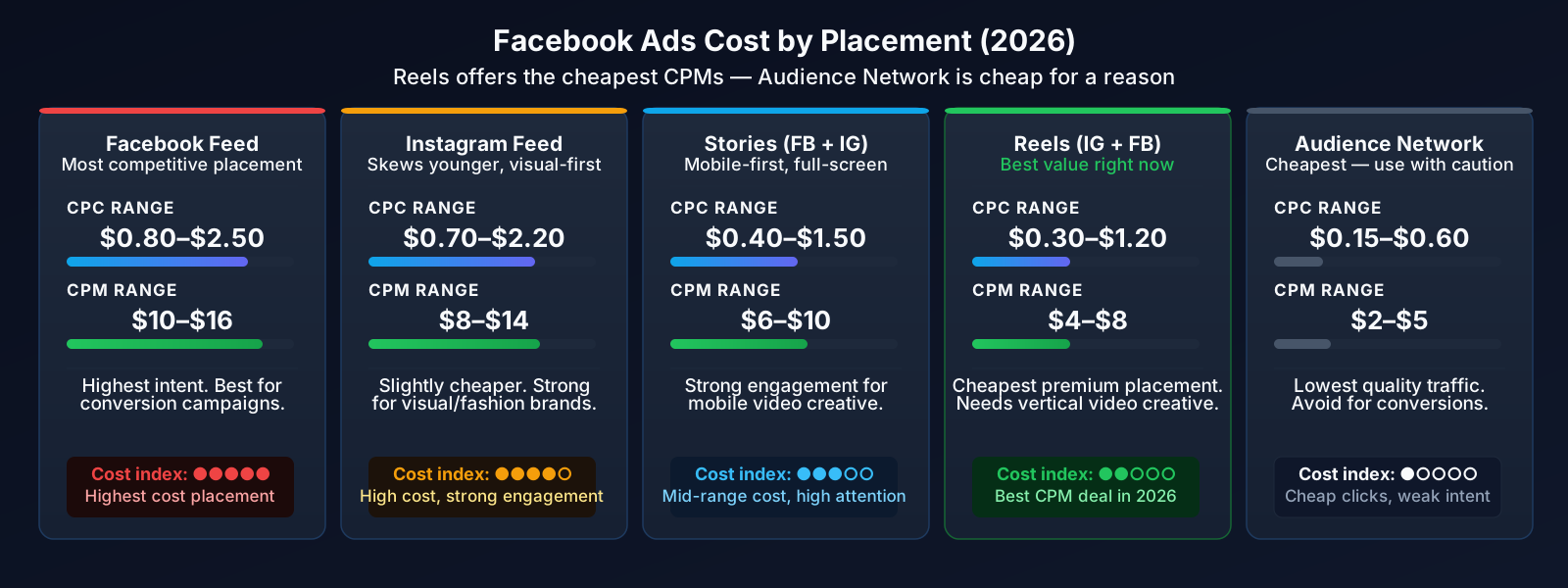
Where your ad appears affects both cost and performance. The 2026 ranges:
| Placement | CPC Range | CPM Range | Best For |
|---|---|---|---|
| Instagram Feed | $0.60–$1.80 | $9–$12 | Younger audiences, visual products |
| Facebook Feed | $0.50–$1.60 | $7–$10 | Conversions, high-intent audiences |
| Instagram Stories | $0.40–$1.20 | $6–$9 | Mobile engagement, video creative |
| Facebook Stories | $0.35–$1.00 | $5–$8 | Mobile-first audiences |
| Reels | $0.30–$1.00 | $5–$7 | Cheap reach, UGC-style content |
| Audience Network | $0.15–$0.60 | $2–$4 | Awareness only (low quality) |
Advantage+ Placements vs Manual Selection
Meta pushes Advantage+ placements (formerly automatic placements), and in most accounts it works. The algorithm distributes budget across placements based on where it finds the cheapest conversions. In our experience, Advantage+ often delivers lower CPAs than manual placement selection, though the exact lift depends on your creative diversity and audience size.
Go manual when you have creative built for one format (vertical video for Reels) or when testing has confirmed one placement dramatically outperforms others for your brand. Otherwise let Meta decide.
Seasonal Cost Fluctuations
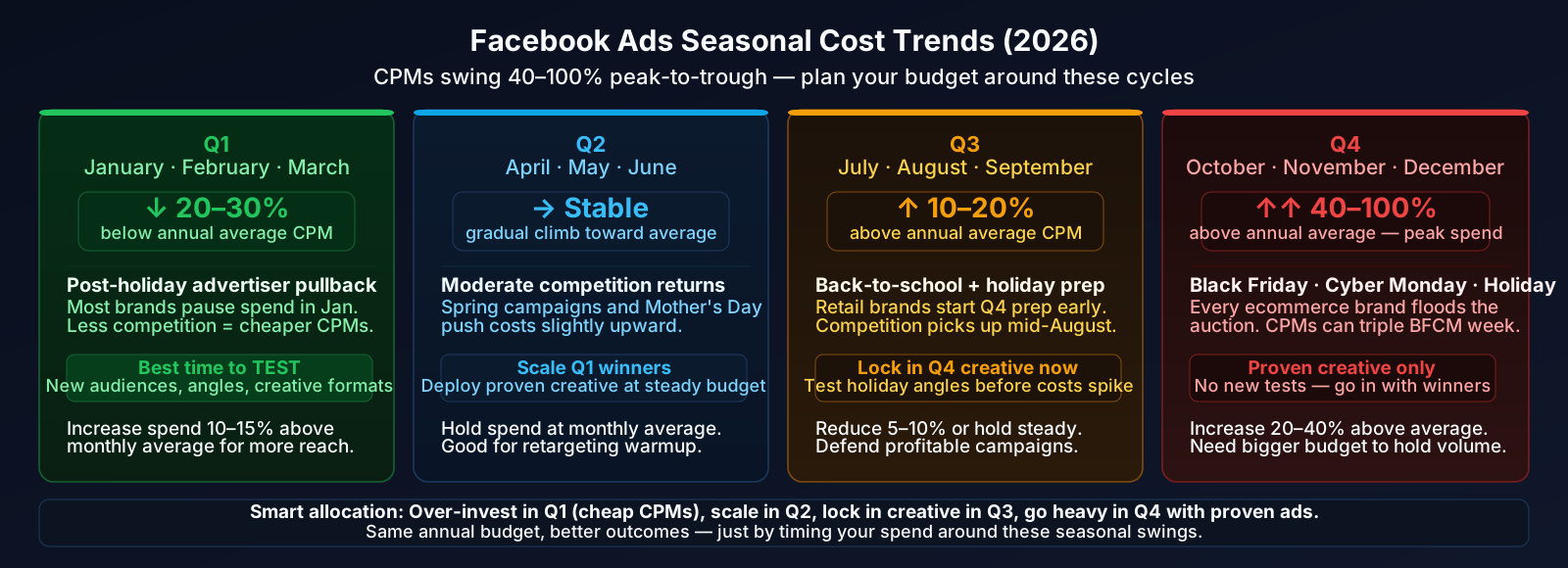
Ad costs follow advertiser demand cycles:
| Quarter | Months | CPM Trend | What's Happening |
|---|---|---|---|
| Q1 | Jan–Mar | 10–25% below annual average | Post-holiday pullback. Best testing window of the year. |
| Q2 | Apr–Jun | Stable, gradual increase | Moderate competition. Good for scaling Q1 winners. |
| Q3 | Jul–Sep | 10–20% above average | Back-to-school plus early holiday prep. Costs climb. |
| Q4 | Oct–Dec | 15–40% above average | Black Friday, Cyber Monday, holiday. BFCM week alone can hit 2x baseline. |
Data: Stackmatix 2026 on Q4 (cited at 15–38%), widened slightly for the full quarter window.
Q1 is your cheapest testing window. CPMs drop after the holiday rush. Every dollar reaches further. Use January through March to test new audiences, creative angles, and offers. By the time costs climb in Q3, you'll know what works and can scale confidently.
Q4 is brutal but unavoidable. If you sell anything consumer-facing, you can't skip Q4. The quarter-average spike shows up every year, and the BFCM week itself is worse: we've seen CPMs roughly double during Black Friday week. Go in with proven creative (not new tests), tight audiences, and a budget allocated specifically for the surge.
Monthly Budget Allocation Strategy
If your annual ad budget is fixed, don't split it evenly across 12 months. Allocate by demand:
- January–March: spend 10–15% above monthly average (cheap CPMs mean more reach per dollar)
- April–June: spend at your monthly average
- July–September: hold steady or reduce 5–10%
- October–December: spend 20–30% above monthly average for the quarter, with an extra 1.8–2.0x baseline week reserved for BFCM
This pattern produces more total impressions and conversions over the year for the same total spend.
How to Lower Your Facebook and Meta Ads Costs
You can't control auction dynamics. You can control the inputs that determine your cost. Six levers that actually move the number:
1. Improve Ad Relevance
Meta's auction rewards quality. Ads with high engagement and relevance scores get preferred delivery at lower costs. Check your ad relevance diagnostics in Ads Manager. If you see "Below Average" on quality or engagement, that's directly inflating your costs.
The fix: test more creative variations. Different hooks, different visuals, different formats. If you're running the same three ads for months, creative fatigue is likely dragging relevance down and costs up.
2. Test More Creative (Seriously)
The single biggest cost lever for most advertisers. Meta rewards accounts that give it variety. More creative options means more chances to find winning combinations of ad + audience + placement.
Aim for 3–5 new creative concepts per week if your budget supports it. Not color variations. Different angles, hooks, and formats. Study what your competitors are running for inspiration.
3. Broaden Your Audiences
Narrow targeting means fewer people to show ads to, which means more competition for those impressions. In 2026 Meta finds converters inside broad audiences better than it did two years ago. We've seen accounts cut CPA 15–25% by moving from hyper-targeted interest stacks to broad targeting with strong creative.
4. Use Advantage+ Placements
Restricting placements reduces the inventory available to Meta. More inventory options means more chances at cheap conversions. Unless you have a specific reason to restrict, let Meta distribute.
5. Fix Your Landing Page
Your landing page conversion rate is the silent killer of ad efficiency. If your page converts at 1% instead of 2%, your effective CPA doubles regardless of what you're paying per click. Speed, clarity, mobile optimization, trust signals all matter. A fast page with a clear offer beats a beautiful slow page every time.
6. Research Your Competitors
Understanding what's working for other brands in your space gives you creative and strategic shortcuts. What offers are they running? What formats? What hooks? You can reverse-engineer their targeting and creative approach instead of guessing.
Budget Planning Framework
Work backwards from your goals. Stop guessing.
The Core Formula
Monthly Budget = Target Sales × Target CPA
That's it. If you want 100 sales per month and your industry average CPA is $25, your baseline budget is $2,500 a month.
Step-by-Step Budget Calculator
Step 1: Define your target CPA. Use the CPA benchmarks above as a starting point. If you're in ecommerce with a $60 AOV and 50% gross margin, your max CPA is $30 (anything above and you're losing money on first purchase). Target $20–$25 to build in profit margin.
Step 2: Set your volume goal. How many sales or leads do you need per month? Be specific. "More sales" isn't a goal. "150 purchases at $25 CPA" is.
Step 3: Calculate base budget. 150 purchases × $25 CPA = $3,750/month.
Step 4: Add a testing buffer. New creative, new audiences, and learning phases cost money. Add 20–30% to your base budget for testing.
$3,750 × 1.25 = $4,688/month (with 25% testing buffer).
Once you have your Meta number, test against blended MER. Single-platform CPA can look fine while your overall marketing efficiency drags. We cover this in MER vs ROAS and you can run your blended number in 60 seconds with the MER Calculator.
Step 5: Adjust for seasonality. If you're planning into Q4, multiply by 1.2–1.5x to account for the quarter-average CPM rise. For BFCM week specifically, plan for 1.8–2.0x baseline weekly spend. For Q1 you'll get more volume at the same budget.
Minimum Viable Budgets by Industry
Rough monthly minimums to generate enough data for Meta to optimize. Below these thresholds the algorithm can't learn fast enough to find your buyer.
| Industry | Minimum Monthly Budget | Expected Result |
|---|---|---|
| Apparel | $1,500–$2,500 | 50–100+ purchases |
| Beauty | $2,000–$3,500 | 40–80 purchases |
| eCommerce (general) | $2,000–$4,000 | 35–75 purchases |
| B2B / Lead Gen | $3,000–$5,000 | 30–80 leads |
| Finance | $5,000–$10,000 | 50–100 leads |
| Home Improvement | $2,500–$5,000 | 30–70 leads |
Meta needs roughly 50 conversions per week per ad set to fully optimize delivery. If your budget can't support that volume, optimize for a higher-funnel event (Add to Cart instead of Purchase) until you scale up. This gives Meta enough data to learn who your buyers are.
See real sample reports from brands like Apple, Ridge, and HexClad
Browse finished PDF exports from the Meta Ad Library, pulled from public data so you see the actual creatives, offers, and formats top brands keep live. Useful when you're calibrating budget against what the leaders in your category are actually running. Free, no login.
See Sample ReportsWhat to remember
-
Facebook and Meta ads CPC ranges from $0.45 to $3.77 depending on industry. The $0.62–$1.14 overall average is a starting point; your industry row matters more.
-
CPA is the metric that actually matters. A high CPC with a strong conversion rate beats a cheap click that doesn't convert. Always work backwards from CPA.
-
Placement choice swings cost more than industry does. Reels delivers the cheapest CPM ($5–$7); Instagram Feed is the priciest ($9–$12) but highest intent. Use Advantage+ placements unless you have a specific reason not to.
-
Seasonal planning is non-negotiable. Q4 CPMs run 15–40% above annual average across the quarter. BFCM week alone can hit 2x baseline. Q1 drops 10–25%. Shift testing budget to cheap months, scale budget into Q4 on proven creative.
-
Lower costs through creative, not just bids. Fresh creative, broader audiences, and better landing pages do more for your CPA than any manual bid adjustment.
-
Budget backwards from goals. Monthly Budget = Target Sales × Target CPA + 20–30% testing buffer. Adjust for seasonality. Don't guess.
-
iOS attribution affects reported CPA. Your actual cost per acquisition is likely 20–40% lower than what Meta shows due to tracking gaps. Factor this in before making drastic budget cuts.
Sources
- Stackmatix: Facebook Ads Cost Per Click: 2026 Industry Benchmarks (Matt Pru, March 9, 2026). CPC across 20 industries, CPM by placement (via SocialRails), CPC by campaign objective, Q4 seasonal data.
- Neal Schaffer: How Much Do Facebook Ads Cost in 2026? CPC / CPM by Industry (revised February 11, 2026). CPM by industry, CPA by industry (via Ninja Promo), overall averages.
- PPC Chief: Average CPC by Ad Platform 2026 (March 1, 2026). Cross-platform CPC comparison (Meta vs Google vs LinkedIn vs Microsoft).
- AdStellar: Average Price Per Click 2026 (March 10, 2026). Meta CPC range and industry breakdowns.
Benchmark data represents medians across thousands of ad accounts. Individual results vary based on creative quality, targeting, landing page experience, and competitive dynamics.