
If you run Meta for a fitness or athletic apparel brand, your creative benchmark is probably your own account history: this month's video share versus last month's, this launch's hooks versus the last one's. That tells you whether you're improving. It doesn't tell you whether you're competitive. So we pulled 80 live ads each from Gymshark, Alo, and Hoka, 240 fitness brand Facebook ads in total, and quantified them on the dimensions you can copy: format mix, run duration, refresh cadence, and copy strategy.
The result surprised us. These three category leaders are running three different creative operating systems, not variations of one playbook, and the gaps between them are wide enough that "what do the big brands do?" is the wrong question. The right question is which system fits your catalog and your production pipeline, and this post gives you the numbers to answer it.
The benchmark, up front (240 live ads, pulled June 9, 2026):
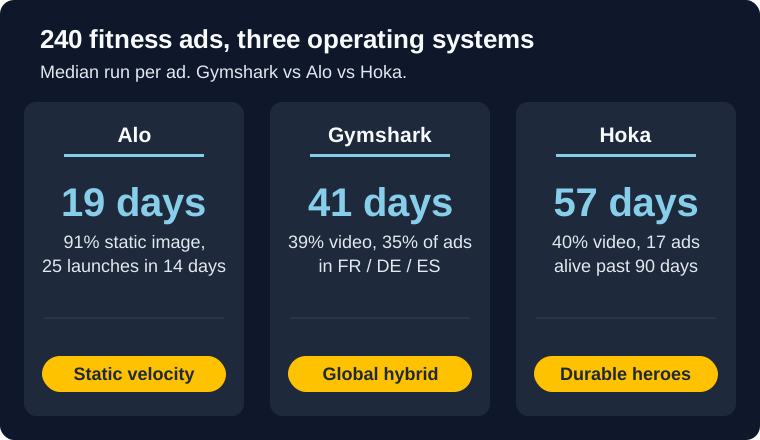
- Alo runs high-velocity static testing: 91% static image, 19-day median run, 25 of 80 ads launched in the last 14 days.
- Hoka runs durable hero creative: 40% video, 57-day median run, 17 ads alive past 90 days.
- Gymshark runs the hybrid, internationally: 39% video, 41-day median, zero ads past 90 days, and 35% of the library in French, German, or Spanish.
- The one thing they agree on: every captured CTA across all three brands is "Shop Now."
How we benchmarked 240 fitness brand Facebook ads
Everything below comes from the public Meta Ad Library, the same place you can check our work. On June 9, 2026, we pulled the top 80 active ads for each brand, all countries, sorted by total impressions. For every ad we captured the body copy, link card, CTA button, started-running date, days running, media type, and the creative file itself.
Run details, so the post is reproducible:
- Sources: the Ad Library pages for Gymshark, Alo, and Hoka, country=ALL.
- Pulled: 2026-06-09. 80 of 80 usable ads per brand, no missing fields on format or run dates.
- Scale note: the Library page hinted at roughly 4,300 total active ads for Gymshark, 1,900 for Alo, and 130 for Hoka at pull time. So the 80-ad cut is a top-impressions slice of Gymshark's library but covers most of Hoka's.
- CTA capture: the CTA button rendered on 77 of 80 Gymshark ads, 80 of 80 for Alo, and 44 of 80 for Hoka. CTA percentages below are out of captured buttons only.
What this data can't show: spend, ROAS, CPA, or targeting. Public Ad Library data covers creative, copy, and longevity, and that's what we benchmark. Every quoted line below is verbatim from a live ad, and every Library ID links to the ad itself.
The headline finding: three creative operating systems
Before the dimension-by-dimension read, here's the whole picture in one table. These are three systems with different costs and different risks, each built around a different bet on what wins the feed.
| Metric (80 ads each) | Gymshark | Alo | Hoka |
|---|---|---|---|
| Video share | 39% (31/80) | 9% (7/80) | 40% (32/80) |
| Median run (days) | 41 | 19 | 57 |
| Ads past 90 days | 0 | 5 | 17 |
| Launched in last 14 days | 6 | 25 | 13 |
| Non-English creative | 28/80 (35%) | 2/80 | 0/80 |
| Captured CTAs = "Shop Now" | 77/77 | 80/80 | 44/44 |
Read down the columns and the three systems name themselves. Alo floods the feed with cheap-to-produce statics, kills them fast, and replaces them faster: a velocity system. Hoka builds fewer, heavier creative assets and lets winners run for months: a durability system. Gymshark holds the middle on format and longevity, then differentiates somewhere neither rival bothers to go: language. We'll take them one dimension at a time, and after each one you can score your own account.
Video vs static: the 9% surprise
The default advice in every fitness ad breakdown is video-first: Reels placements, UGC hooks, motion wins the scroll. Two of the three leaders agree. Gymshark's Facebook ads split 31 video to 49 static (39%), Hoka's 32 to 48 (40%).
Then there's Alo at 7 videos out of 80. Nine percent.
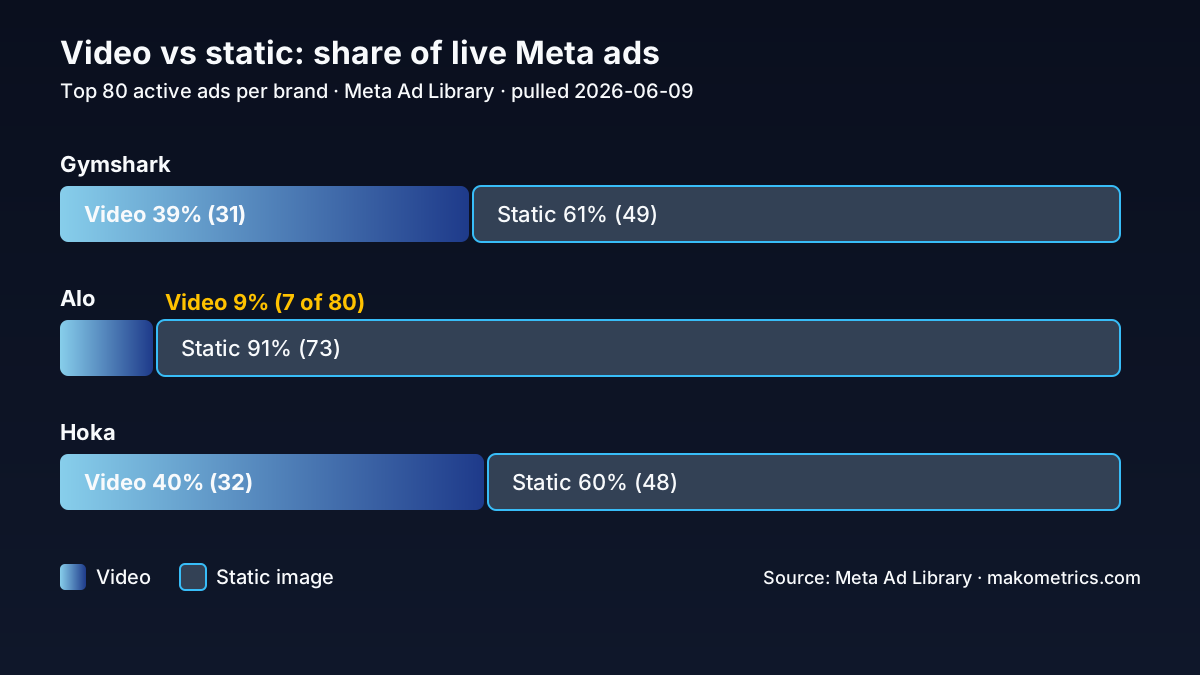
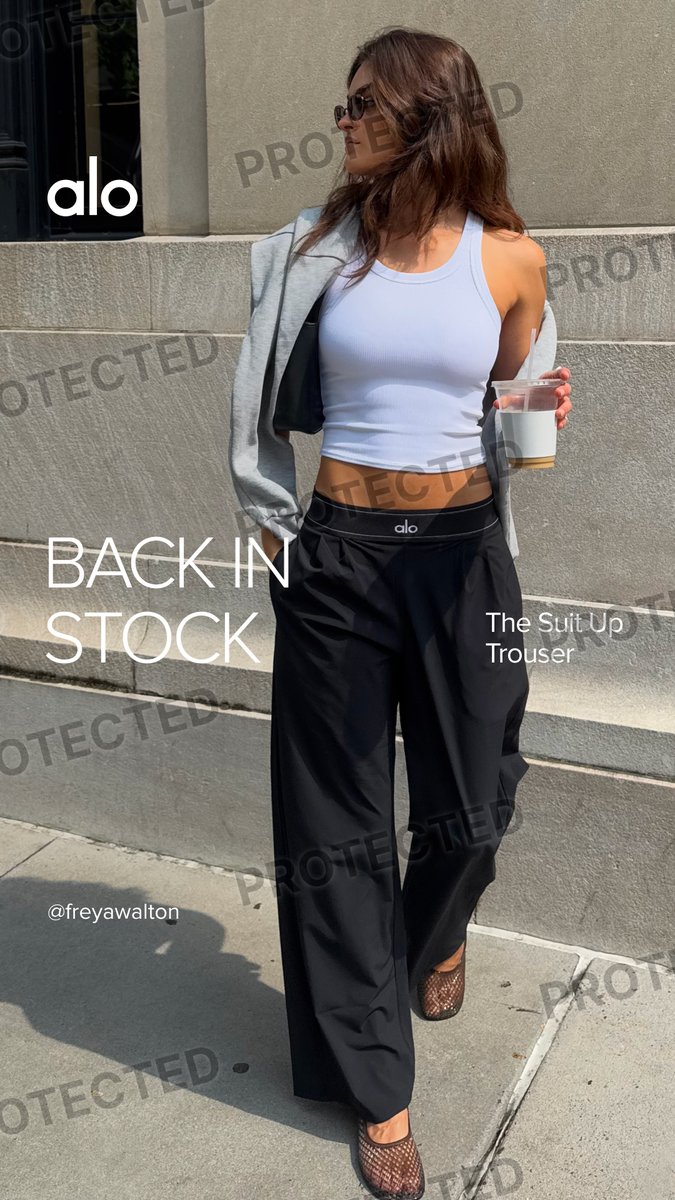
That's not a brand falling behind on video. Alo is one of the most sophisticated DTC advertisers in apparel, and the 91% static share is a choice with a visible logic in the rest of their numbers: static is fast and cheap to produce in volume, and a 19-day-median, replace-a-third-of-the-library-every-two-weeks system eats exactly that. Polished product photography on a model, a one-line hook, ship it, read the data, next.
The lesson isn't "static beats video." It's that format follows system. Hoka's 40% video pairs with 57-day runs: heavy assets, long amortization. Alo's 9% pairs with 19-day runs: light assets, fast iteration. Both work. What doesn't work is the accidental middle: paying video production costs and then killing the asset in two weeks, or running cheap statics that sit untouched for a quarter.
Where do you sit?
Count your active ads and your video share. Under 20% video is fine if your median run is short and your refresh is fast (the Alo system). Under 20% video with 60-day-old creative is drift. At 35-40% video, check that your videos outlive your statics; if they don't, you're paying motion prices for static lifespans.
Run duration: 19-day sprints vs 57-day marathons
Days running is the only performance proxy the public Ad Library gives you, and it's a good one: brands don't keep spending on losers for weeks. We've used it before to rank the longest-running ecommerce ad creative, and the spread inside this fitness trio is wider than anything in that study.
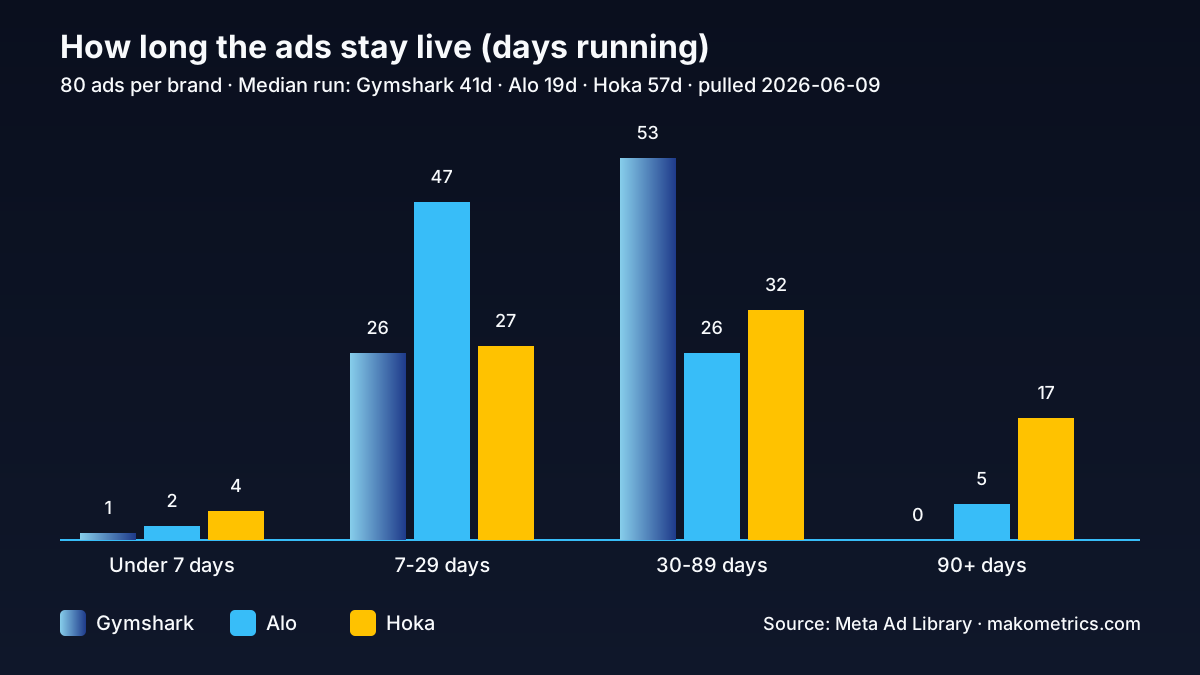
The medians: Gymshark 41 days, Alo 19, Hoka 57.
The buckets tell you more than the medians:
- Alo: 47 of 80 ads sit in the 7-29 day band. Only 5 survive past 90 days, and the survivors are evergreen catalog statics like "New season, new wardrobe." (Library ID 784834500838713, image, 102 days).
- Hoka: 17 ads past 90 days, the deepest evergreen bench of the three. The extreme case is a retargeting static reading "You were so close to your new favorite pair of shoes." (Library ID 1396160074986938) at 343 days. Nearly a year on one abandonment ad.
- Gymshark: 53 of 80 ads in the 30-89 day band and zero past 90. The oldest ads in the cut top out at exactly 89 days, with a brand video built on "The gym isn't just what we do best, it's everything we do" right behind them (Library ID 1595969628180234, video, 88 days). A wall that clean across 80 ads looks like a deliberate quarterly refresh ceiling, not coincidence.
A long-running ad is a winner right up until it's furniture. If you want the diagnostic for that line, we wrote a separate playbook on detecting creative fatigue before it taxes your CPA. The fitness read here: Hoka trusts winners and milks them, Alo treats every ad as disposable, and Gymshark appears to cap creative age by policy.
Where do you sit?
Pull your own median days running across active ads. If nothing survives past 14 days, you have a testing machine but no winners, and the fix is usually the offer or the landing page, not more creative. If everything lives past 60, you have winners but no testing, and you won't see fatigue coming. The leaders' healthy band runs from Alo's 19 to Hoka's 57, and each number is earned by the production cadence behind it.
Refresh cadence: Alo replaces a third of its library every two weeks
Longevity is how long winners live. Cadence is how fast new challengers arrive. Launches within the last 14 days of the pull: Alo 25 of 80, Hoka 13, Gymshark 6. Stretch to 30 days and Alo has launched 50 of its 80, half the visible library.
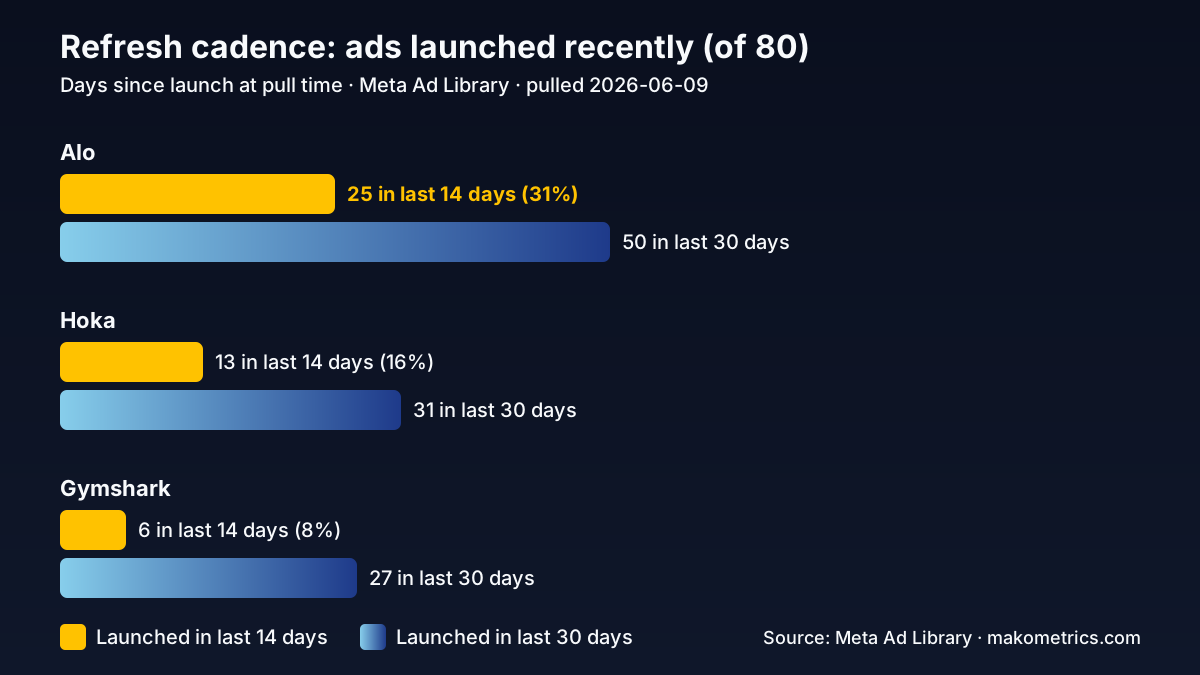
Alo's cadence is the engine that makes 91% static viable: drop new colorways, photograph them, push 20+ fresh statics, let two weeks of delivery data pick survivors, repeat. Hoka launches in visible bursts around product moments, like the "Motion Party Pack" colorway push that put 10 fresh statics live in the week before our pull (Library ID 3412305152283882). Gymshark's 6-in-14-days looks slow until you remember the 89-day wall: they refresh in planned waves, not a continuous drip.
Cadence is the dimension where copying the wrong leader hurts most, because it's priced in production capacity. Alo's system needs a photo studio pipeline that ships dozens of assets a month. If your team produces six new creatives a month, Alo's numbers are a trap. Match cadence to what your pipeline ships reliably, then pick the longevity posture that fits.
Where do you sit?
Count ads launched in the last 14 days, divide by your active total. Alo sits at 31%, Hoka at 16%, Gymshark at 8%, and all three are healthy because each cadence matches its production model. The red flag is a mismatch: a "velocity" strategy deck with a Gymshark-grade 8% actual cadence.
Copy systems: scarcity loops, one mantra, and localized must-haves
Format and cadence are what the charts see. The copy is where each brand's persuasion theory shows up, and the three systems hold.
Alo writes scarcity, briefly. (The brand advertises as Alo Yoga; the ads cover the full apparel line.) The single most repeated line in Alo's cut, on 13 of 80 ads, is "Sold out once, definitely will sell out again." (Library ID 1511431557664292, image, 36 days). Average body length across the cut is 69 characters, the shortest of the three. The rest of the library rotates soft lifestyle lines like "Meet the shades of the slow life - golden sand, sunlit skies, and easy days by the sea." (Library ID 966486566269747). One urgency engine, many aesthetic wrappers.
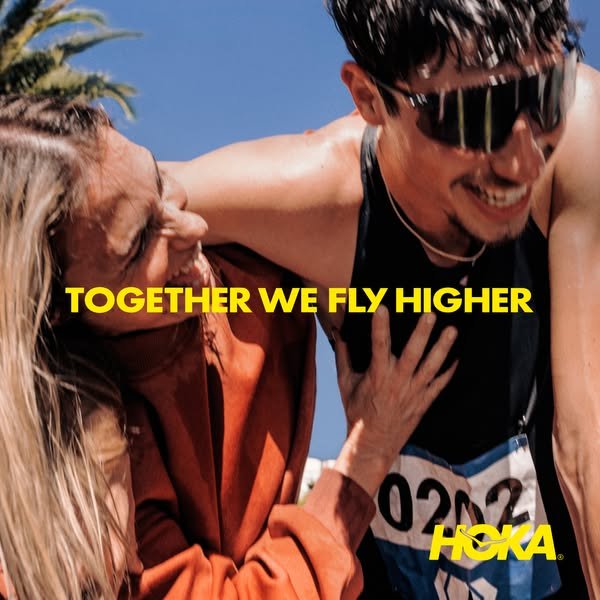
Hoka writes emotion for runners. The long-lived Hoka ads read like race-day voiceover: "The legs give out. The heart doesn't. Together We Fly Higher." (Library ID 1572136400719595, 103 days) and "Each stride cuts through the quiet." (Library ID 2682748158748856, video, on 4 ads, the oldest two at 103 days). This is the copy that earns 90-day runs: identity lines that don't fatigue the way an offer does. Alongside the poetry sits unglamorous segment work, like the teachers-and-students discount ad on 6 of 80 (Library ID 1977547422834747).
Gymshark writes in five-plus languages. 28 of Gymshark's 80 ads, 35%, run in a language other than English, led by French (11) and German (9): "Sois équipé.e pour Janvier et performe dès le début d'année" (Library ID 747927978311258), "Entdecke unsere Kollektion mit den Must-Haves für Damen" (Library ID 2146111439489893, 75 days). These point at localized regional stores (eu., uk., au., de., nl., and fr. subdomains all showed up in the cut's link cards), not auto-translated copy on one landing page. Alo runs 2 non-English ads in its cut; Hoka runs zero. Among these three, Gymshark is the only brand treating Meta as a localized international channel, which is its own kind of moat: it doesn't show up in a format-vs-format comparison, and it compounds.
And the CTA buttons? Nothing to benchmark. Every captured CTA across all three brands, 201 buttons in total, is "Shop Now." (Hoka's button rendered on only 44 of 80 ads, so treat their number as partial.) When the entire category converges on one CTA, the differentiation has to happen in the creative and the copy, which is what the rest of this data shows.
Where do you sit?
Count your distinct messages, not your distinct ads. Alo runs one scarcity engine in many wrappers; Hoka runs a few identity lines for months; Gymshark runs one catalog message localized three ways. All three know exactly which game they're playing. If you can't name your equivalent in one sentence, your copy is rotating at random, and no cadence or format fix will save it.
This took us one afternoon per brand. Yours takes one click.
Everything above is one quarterly read on three brands we picked. A Mako Metrics report runs this same analysis on the competitors you actually fight: every live ad with copy, CTA, days running, and the creative files, plus a filterable gallery and a PDF you can drop into your next creative review.
Look at a finished example first. No login, no card.
Which operating system should you run?
Don't pick the brand you admire. Pick the system your catalog and pipeline can feed.
Run Alo's velocity system if your catalog turns over fast: frequent drops, colorways, seasonal collections. You need a static production pipeline that ships 15+ assets a month and a willingness to kill ads at two weeks without sentiment. Your video budget can stay small; your photography budget can't.
Run Hoka's durability system if you sell a hero product with a story: one shoe, one piece of equipment, one flagship line. Invest in fewer, heavier creative assets (video and identity copy), let winners run for months, and put your discipline into fatigue detection instead of launch volume. Cadence stays low; asset quality carries the account.
Run Gymshark's hybrid if you're past one market and one message: balanced format mix, a planned refresh ceiling (theirs looks like ~90 days), and localization as the growth move once your home-market creative engine is stable. It's the most expensive system to staff, which is why most brands borrow it before they can afford it.
Whichever you choose, write the choice down as thresholds: target video share, target median run, target 14-day launch ratio, one named copy engine. Then re-run this read quarterly, because the benchmark decays. Alo's numbers in this post describe June 2026; their last 90 days of launches will replace half of what we measured. That's also why we do this analysis as a single-brand deep dive when one competitor matters more than the category, and why the output should end up as a creative brief your designers can use, not a screenshot folder. We ran the same three-system read on DTC beverage, and Liquid Death, Celsius, and Ghost spread even wider than these three, from a 13-day to a 160-day median run.
The self-benchmark card
The whole post in one pass. Score your account on these four lines:
| Dimension | Leader range | Your red flag |
|---|---|---|
| Video share | 9% (Alo) to 40% (Hoka) | Low video AND slow refresh, or video prices with static lifespans |
| Median run | 19 to 57 days | Nothing survives 14 days, or nothing dies by 60 |
| Launched last 14 days | 8% to 31% of library | Cadence that doesn't match your stated strategy |
| Copy engine | One nameable system each | You can't name yours in a sentence |
Three leaders, three systems, no consensus playbook. That's the actual benchmark: not Gymshark's video share or Alo's cadence, but the fact that every one of these accounts can name its system and fund it on purpose. Pull your own numbers, pick your lane, and check back in a quarter.