
You open Meta Ad Library, you type in Stripe. The page does not stop loading. Hundreds of live ads in every major language, sorted however you like. Five minutes of scrolling later, you've read four ads, formed three half-opinions, and learned nothing you can act on. That's the wrong way to read a giant's playbook. This Stripe Meta ads teardown does the read for you.
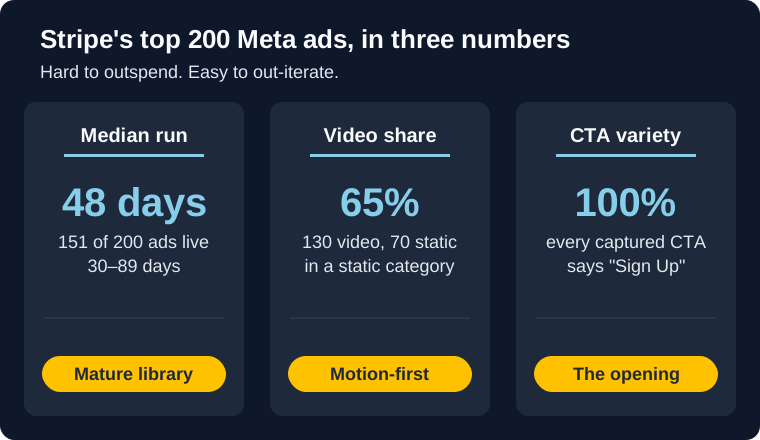
We pulled Stripe's top 200 active ads by total impressions on May 26, 2026, across all countries, with copy, CTA, days running, language, and media files. The pattern inside that volume is what matters, and it tells a challenger exactly where to push. The short version: Stripe runs a disciplined, video-first, product-segmented Meta library that's hard to outspend and easy to out-iterate at the CTA, hook-diversity, and refresh-cadence level. Four strengths to respect, three soft spots to flank, and three moves any rival (SaaS, fintech, or a DTC brand studying how a B2B giant runs Meta) can test this week.
The six findings, up front:
- Mature library: 48-day median run, 151 of 200 ads alive 30-89 days.
- Video-first at 65%: 130 video, 70 static, in a category that usually defaults to flat image.
- Vertical product creative: AI billing, no-code SMB, mobile payment links, founder/Atlas, enterprise usage-based, all running side-by-side.
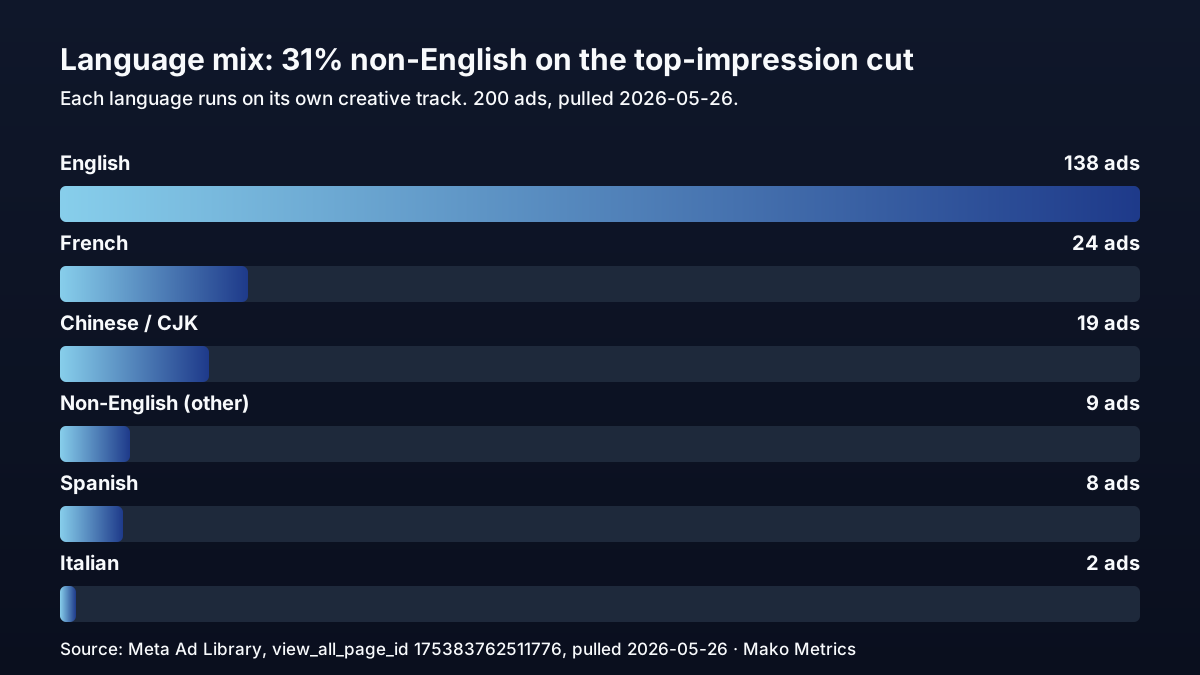
- Multilingual at 31%: English, French, Chinese, Spanish, Italian, each on its own creative track.
- CTA monoculture: every captured CTA is "Sign Up." No funnel-stage variety.
- Slow refresh on a big library: only 6 new ads in the last 14 days, plus a median of one variant per ad.
How We Read Stripe's Library (The Method, In One Pass)
Most coverage of Stripe's marketing is brand commentary or product-launch news. We did not write either. We hit the Meta Ad Library page for Stripe's Facebook ads, sorted by total impressions, all countries, and pulled the top 200 active ads. For each one we captured the body copy, the link card (display URL, headline, description, CTA), the started-running date, days running, language, and the actual creative file.
Run details, so the post is reproducible:
- Source: facebook.com/ads/library?view_all_page_id=175383762511776, country=ALL, sort by total impressions.
- Pulled: 2026-05-26.
- Captured: 200 of 200 in the cut, every field populated.
- Scope note: "top 200 by impressions" is a cut, not the entire library. Where I say "Stripe's library" below, read "Stripe's top-impression library."
Every number below traces to that pull. Every quoted line is verbatim. Every Library ID below links to the live ad.
Strength 1: A Mature, Stable Library (48-Day Median)
Of the 200 active ads in the cut, the average run is 52 days. The median is 48. The distribution is the real story:
- Under 7 days: 2 ads.
- 7-29 days: 46 ads.
- 30-89 days: 151 ads (76% of the library).
- 90+ days: 1 ad.
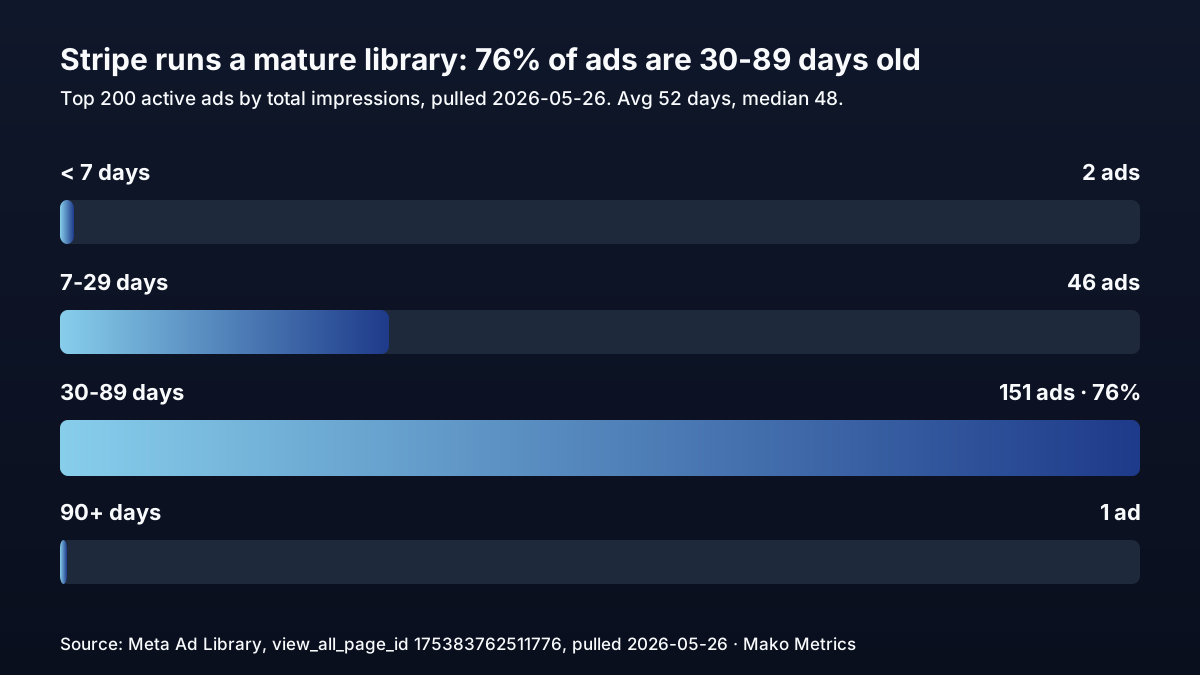
Three quarters of Stripe's top-impression library sits in the 30-89 day bucket. That is what creative maturity looks like in B2B fintech: pick winners, leave them live, refresh selectively. For comparison, our DTC teardown of OLIPOP showed zero ads past 30 days. Different categories, different cadence, different rules. We also ranked DTC longevity in a separate study, and the same pattern holds: B2B SaaS earns longer flights because the buyer cycle is longer and the creative doesn't fatigue as fast. The extreme case is our Shopify teardown, where the oldest live ad had run 686 days.
For a competitor, the read is simple. You're not going to out-run Stripe on any single creative. Their winners have been running, in some cases, for months. The strategy is to out-test them on variety, and that is where the soft spots open up later in this post.
Strength 2: Video-First in a Category That's Usually Static (65%)
B2B fintech defaults to static. Stripe does not.
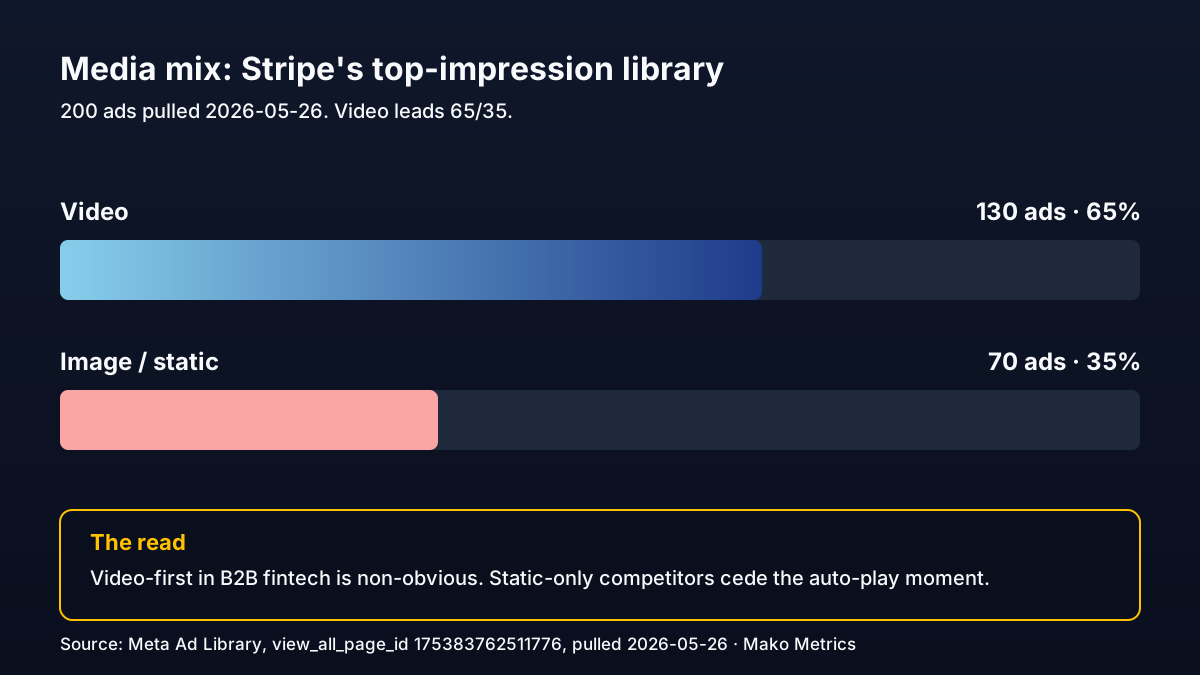
The split in the top 200: 130 video and 70 static image. That's 65% video on a library most operators would expect to be flat. Reels and Stories auto-play. Feed posts increasingly do too. A 65% video library tells you Stripe is buying attention in placements where motion wins by default.
Look at what the videos do. The longer-running ones are product demos: a 5-second screen capture of a mobile invoice being sent, a 10-second loop of payment links being generated, a customer talking on camera about usage-based billing. They look operator-built rather than film-school polished. Product demos are easier to show than explain. Static can carry an icon and a stat. Video can carry the product in motion.
The clearest example: "Start selling online with just a few clicks, no code required." (Library ID 861196210293417, video, 83 days running, "Sign Up"). That sentence is faster to grasp as a 15-second screen recording than as a paragraph.
If you run static-only B2B creative against a competitor with a 65% motion library, you are conceding the auto-play moment. You do not need a production team. You need one screen recording, one founder explainer, and a willingness to let Meta find which one earns.
Strength 3: Vertical Product Creative (One Library, Many Buyers)
This is the most distinctive thing about Stripe's library, and the section worth lingering on if you're a SaaS marketer mapping your own product surface area to ad lanes.
Stripe runs clean lanes by product line and buyer, with no generic brand creative in the cut.

Five lanes show up in the data, each with its own copy register and buyer:
- AI billing. "Unlock scalable billing for your AI product with Stripe today" (Library ID 967876648948049, video, 29 days, "Sign Up"). Aimed at AI startup founders who haven't engineered usage metering yet.
- Enterprise usage-based. The Browserbase case study (Library ID 26597082336585398, video, 29 days), framed as: "Browserbase scaled a usage-based billing system for millions of browser-session minutes each month." Social proof for enterprise consideration.
- No-code SMB. "Start selling online with just a few clicks, no code required." (Library ID 861196210293417, video, 83 days, "Sign Up"). For the merchant who isn't going to integrate an SDK.
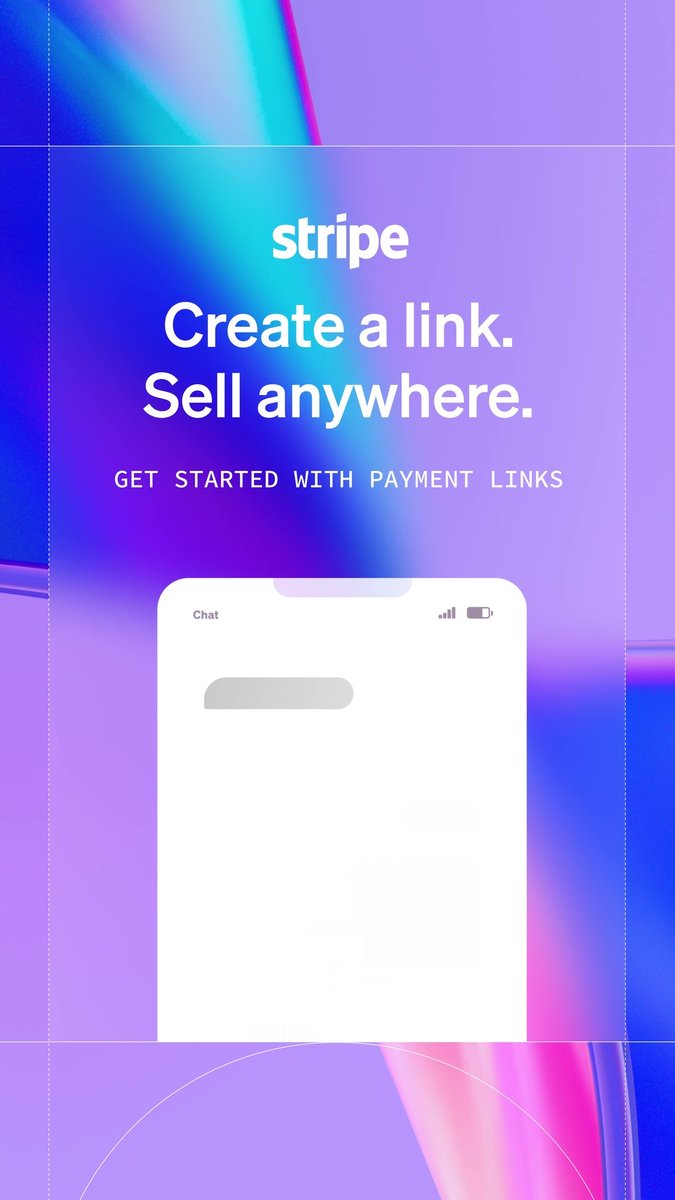
- Mobile payment links. "Generate payment links on the Stripe mobile app and share them instantly." (Library ID 4005579913080511, video, 20 days). For service businesses billing on the go.
- Founder / Atlas. A French-language pitch, "comme plus de 100 000 fondateurs, créez votre société...", shows up in 18 ads with that exact copy pattern. Atlas (company formation) targeted at non-US founders.
Same company, very different ads. Each lane carries a different pain: AI founders need usage-based billing without building it; SMBs need to take a card today; service businesses need to bill from their phone; non-US founders need an entity to bill from. That's a real audience map, not a creative spray.
If your product has more than one buyer (SaaS or DTC, doesn't matter), the move here is the same one Stripe is making. Pull your surface area apart, name two or three distinct buyer pains, and run a lane against each. The brief format we use for that starts from the same place.
Strength 4: Multilingual at ~31% (Real Localization, Not Mixed Copy)
Stripe's top-impression cut is 138 English, 24 French, 19 Chinese / CJK, 9 other non-English, 8 Spanish, and 2 Italian. Roughly 31% of the cut is non-English, and each language runs on its own creative track. They are not running one ad set with mixed copy or auto-translated landing pages. The French Atlas pitch is a fully French creative pointed at French-language LPs. The Chinese ads are originated, not translated.
If you compete in the same geographies, the cost of admission is per-language ad sets and localized landing pages. Mixed-copy ad sets, or English creative pointed at translated LPs, will lose to a competitor running this discipline. You can read a competitor's geographic strategy from their copy patterns once you know to look for it.
Want this same teardown on your actual competitor?
The pull above produced a 200-ad dataset with copy, CTA, days running, language, local media files, a filterable HTML catalog, and a PDF report. We did it for Stripe because it's a clean example. We do it for any active Meta advertiser you name.
Look at a sample first. No login, no card.
Soft Spot 1: CTA Monoculture (Sign Up, Every Time)
This is the biggest, cleanest opening in the library.
Every captured explicit CTA in the 200-ad cut is "Sign Up" (64 of 64 ads where a CTA label rendered, plus 2 "Download" buttons for the iOS Stripe app). Nothing pointed to "Learn More." Nothing pointed to "Get a Demo." Nothing pointed to "Compare Plans" or "Contact Sales."
Stripe is treating every Meta impression as a bottom-of-funnel signup ask. That works when your brand awareness is already saturated and your funnel can swallow self-serve traffic. It leaves the entire top and middle of the funnel uncovered. Anyone in evaluation, anyone comparing Stripe to Adyen or Braintree, anyone an enterprise stakeholder pricing options for their CFO before signing up, is being asked to "Sign Up" without an in-between step.
For a challenger, this is asymmetric. Run a sister ad set with "Learn More" pointed at a long-form product page, or "Get a Demo" for enterprise, or "Compare Plans" for buyers in evaluation. Same audience, same creative format, different CTA. You'll catch the awareness and consideration buyers Stripe isn't asking for, in a feed where their only ask is "Sign Up."
Soft Spot 2: Slow Refresh on a 200-Ad Library
Stripe's launch cadence on this cut:
- 0-7 days since start: 2 ads.
- 8-14 days: 4 ads.
- 15-30 days: 42 ads.
- 31+ days or unknown start: 152 ads.
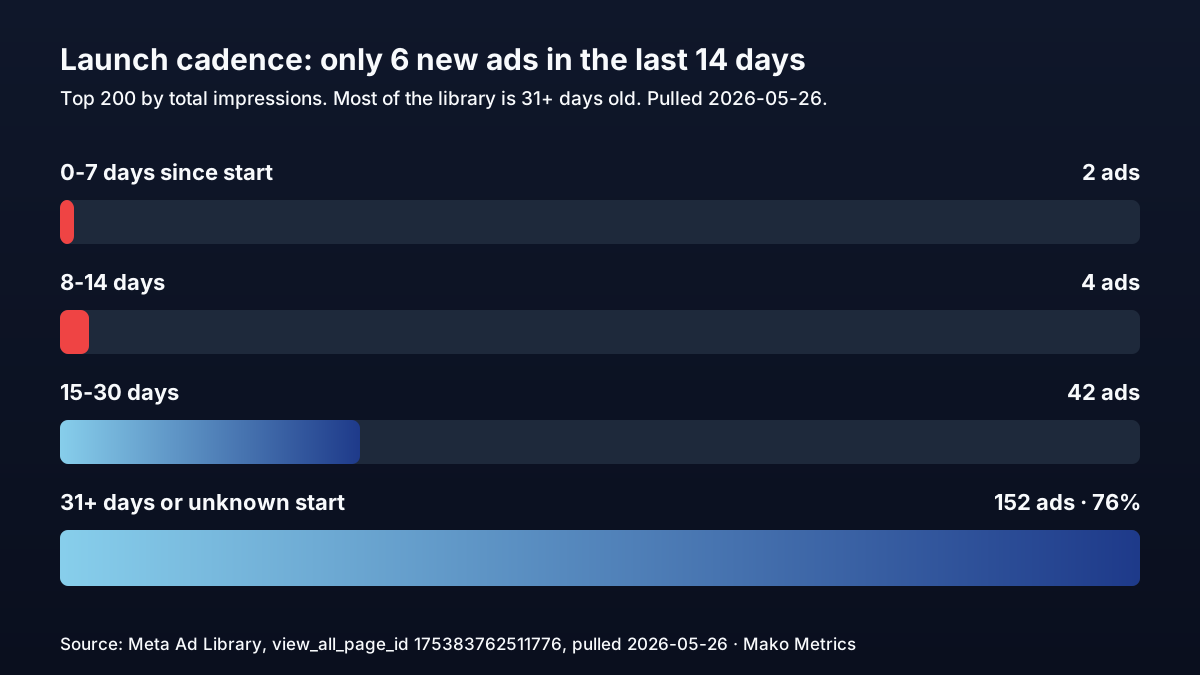
Six new ads in the last 14 days, on a top-impression library of 200. Most of the library is 31+ days old. For DTC comparison, our OLIPOP teardown showed 24 ads launched in 14 days on a 66-ad library. Different category, different rules, but the contrast holds: Stripe ships measured, slow, deliberate refreshes.
That's a tradeoff, not a flaw. A mature library can afford to refresh selectively because the winners have earned the flight time. The cost: any specific creative read goes stale on the same audience after a few weeks of repeat exposure, and a faster-iterating rival can claim attention sooner. If your team can ship a fresh hook every week, you're sampling more of the message space than Stripe is on any given audience.
Soft Spot 3: Hook Repetition + No Visible Within-Set Testing
The third soft spot is harder to see at a glance and the most actionable once you do.
Body-copy patterns in the cut concentrate hard. "Payments" appears in 43 ads, "billing" in 19, "pricing" in 16, "no code required" in 20, and the French Atlas founder pitch in 18. The headline-diversity ratio in the list view shows the same headline ("www.facebook.com," a scrape fallback for many video ads) on 136 of 200 records. That number is partly an artifact of how Meta exposes video ad headlines in the list view, but the underlying body-copy concentration holds: a relatively small set of message clusters spread across many ads.
The other half of the read is variant count. Median variants per ad: 1. Few ads carry visible in-modal A/B copy variants. Most are a single creative running by itself.
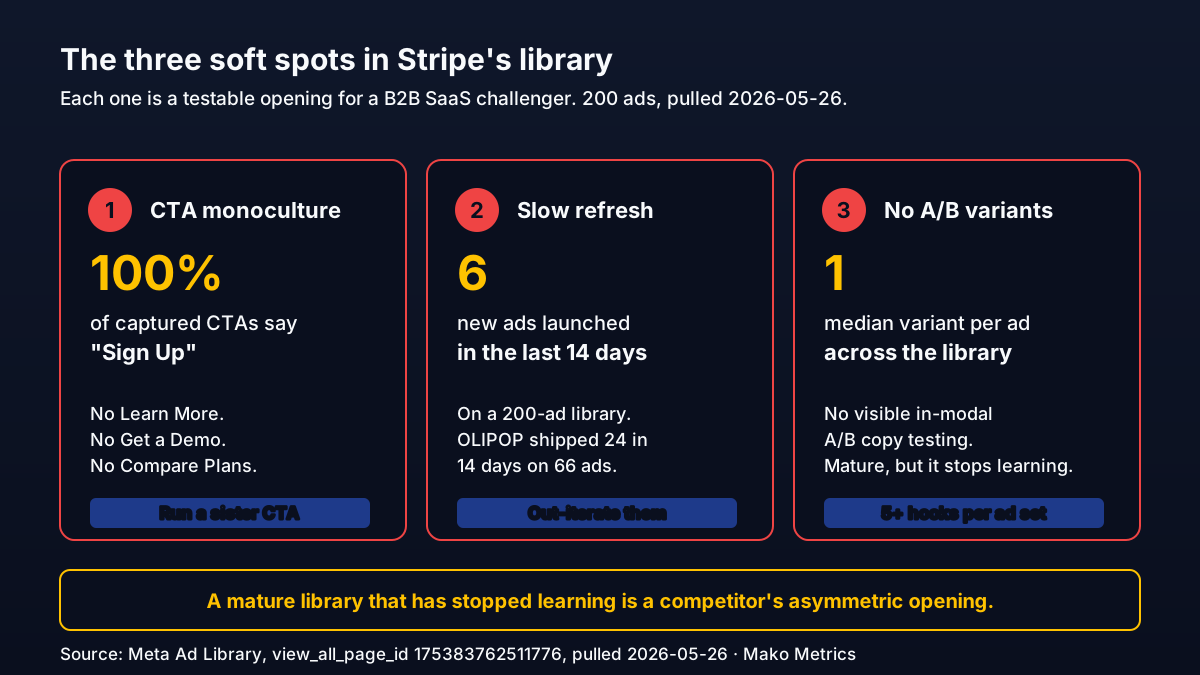
The trap of a mature library: it stops learning. When the winners are big enough, you stop testing inside the ad set because the existing creative is already converting. The flank is to do what Stripe isn't. Run five distinct headline angles per ad set, same audience, same offer, and let Meta sort. The hooks have to actually differ, not be the same sentence with a synonym swap. A working formula: one stat hook, one objection hook ("I tried Braintree and..."), one founder hook, one comparison hook, one outcome hook ("Two weeks in, what changed"). Five hooks, one creative each. Run for 10 days. Read the results. Replace the bottom two with fresh variants. That cycle, repeated, produces a library Stripe isn't bothering to build.
Read Stripe's Library Like a Filterable Database
The Meta Ad Library page is the source of truth. It is also a scroll, not a database. Half the work of a teardown is forcing the data into a shape you can filter against. For this run, we did that automatically: every Mako report ships an offline, filterable HTML catalog alongside the PDF.
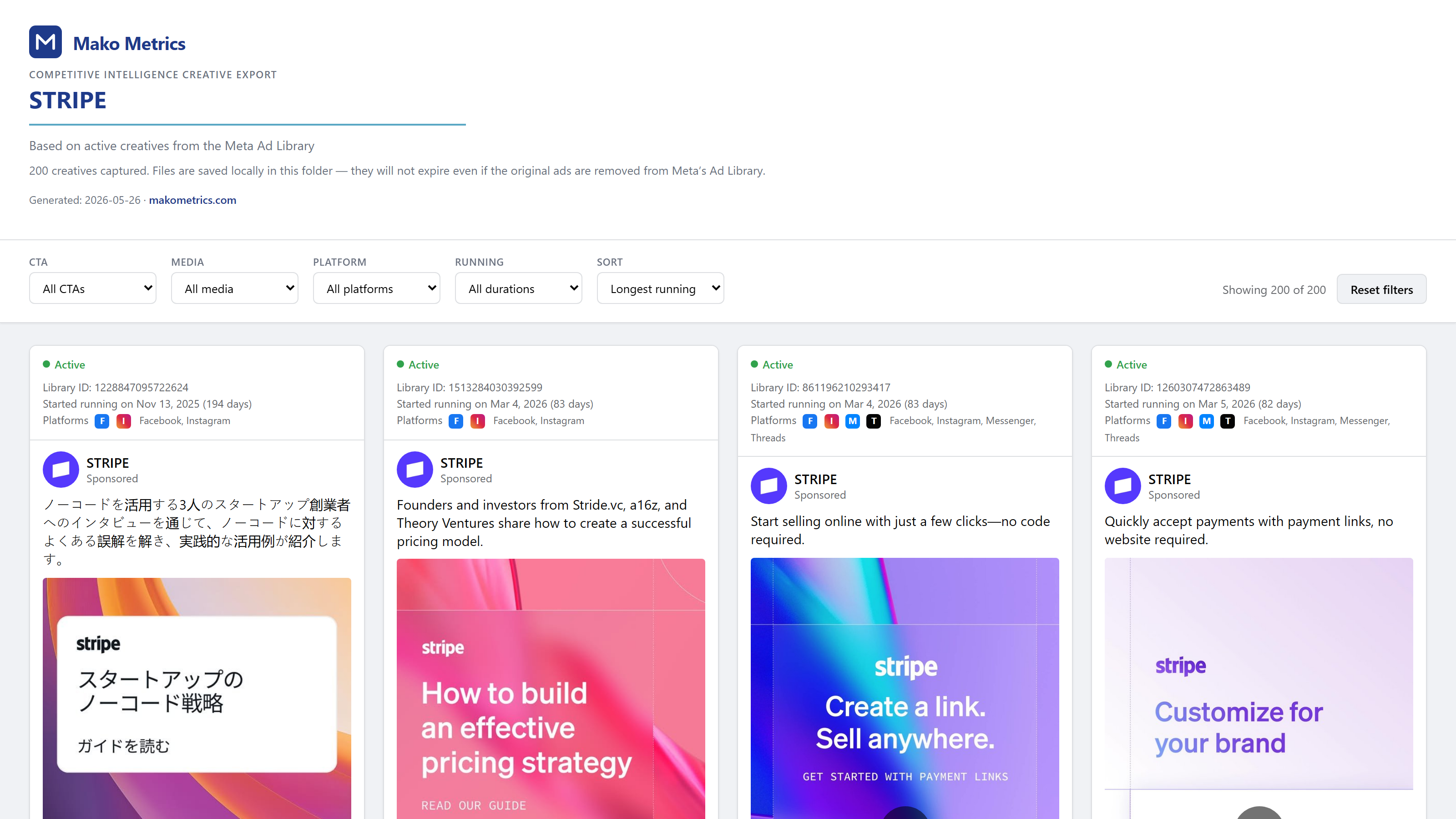
Three filters worth running first against any library you pull:
- Language = non-English. See the French, Chinese, Spanish, and Italian tracks side-by-side. For Stripe, this surfaces the founder/Atlas concentration in French and the product-line tilts that vary by region.
- Media type = video, sort by duration desc. The long-running motion creative is where their highest-conviction bets live. For Stripe, this is where the no-code SMB and mobile invoicing ads sit.
- Duration bucket = 30-89 days. Anything that survived their own kill threshold. Those are the angles they have decided to keep paying for.
Sixty seconds of filtering this way teaches you more about a competitor than an hour of scrolling.
Three Counter-Positioning Moves a Challenger Should Test
Findings only matter if they change what you test next week. Three moves that map directly to the soft spots above. They work whether you're a SaaS rival, a fintech challenger, or a DTC brand applying the read to your own incumbent.
Move 1: Add funnel-stage CTAs Stripe is not running
"Sign Up" is fine for a buyer who already knows what they want. Test "Learn More" on top-of-funnel video pointed at a long-form product page, "Get a Demo" on enterprise creative pointed at a sales-routed form, and "Compare Plans" on a consideration ad pointed at a pricing or alternative page. Same creative format, same audience, different CTA. You will capture awareness and consideration buyers Stripe is not asking for.
Move 2: Out-iterate them on hook diversity
Stripe ships roughly six new top-impression ads every 14 days, with a median of one variant per ad. Run four to six distinct hook angles per ad set, refresh every two to three weeks, and you'll be sampling more of the message space than they are on the same audience. The five-hook formula in Soft Spot 3 is the recipe.
Move 3: Own a pain lane Stripe under-runs
Stripe's library indexes hard on outcome and feature themes (34 + 23 of 200 ads). The pain/problem theme is only 6. If your product has a sharper pain angle, lean into it. Three real ones for the payments space: declined-card revenue recovery, fraud margin loss, finance-ops time spent on reconciliation. Stripe leaves those angles uncovered in this cut, which is a room to claim. The same logic applies in DTC: incumbents who've earned the right to "Shop Now" stop running pain hooks, and a challenger who names the pain owns the awareness conversation. Our B2B teardown on Gusto reads as the same method on a different vertical, because it is. The pattern works in HR tech, in payroll, in DTC, in any market where the incumbent has stopped writing about the problem.
The Closing Take
Stripe's Meta library looks like a giant. Pulled apart, it's a giant running a disciplined, polished playbook at scale: video-first, vertically segmented, multilingual, and built around winners that have earned the flight time. That discipline is also legible. A focused challenger can beat Stripe on a budget by being the brand running the funnel-stage CTA Stripe skips, on the pain lane Stripe under-covers, with the hook diversity Stripe never bothers to test. The competitor you fear most is probably running fewer ideas than you think, and the same read works whether the giant in your category is a B2B platform or the DTC brand that just took your category.
If you want this read on a brand you actually compete with, that's what Mako Metrics builds. And if the question is who should build the ads once you have the read, we ranked ten tools for B2B software teams, sorted by which part of the round each one owns.
By the Mako Metrics team. We pull Meta Ad Library data, turn it into operator-ready reports, and write the occasional teardown when the pattern is worth sharing.