
Shopify's best-performing Meta ad right now isn't about Shopify.
It promotes a blog post about passive income. It launched October 29, 2025, and it's still live. 194 days in the Meta feed, targeting people who don't yet have a business idea, with a "Learn More" CTA that goes to an article.
That single ad explains the strategy. We pulled 80 of Shopify's 530 active image ads through our analysis pipeline to map the full picture: two separate playbooks running simultaneously, why some creatives survive 686 days while others die in weeks, and the specific messaging gaps their competitors aren't touching.
Key findings from 80 sampled ads:
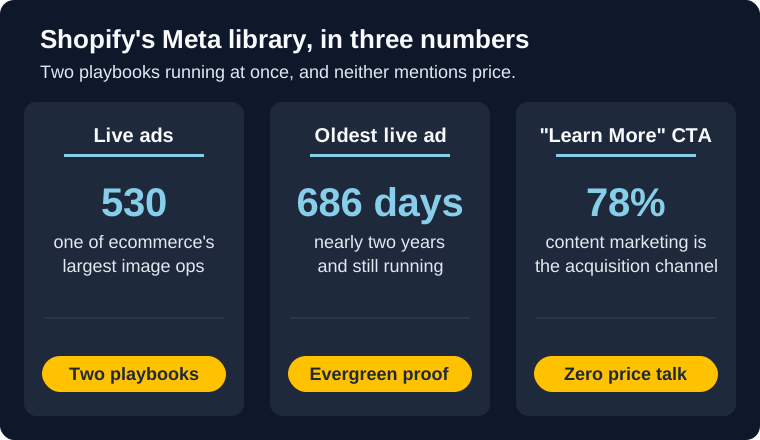
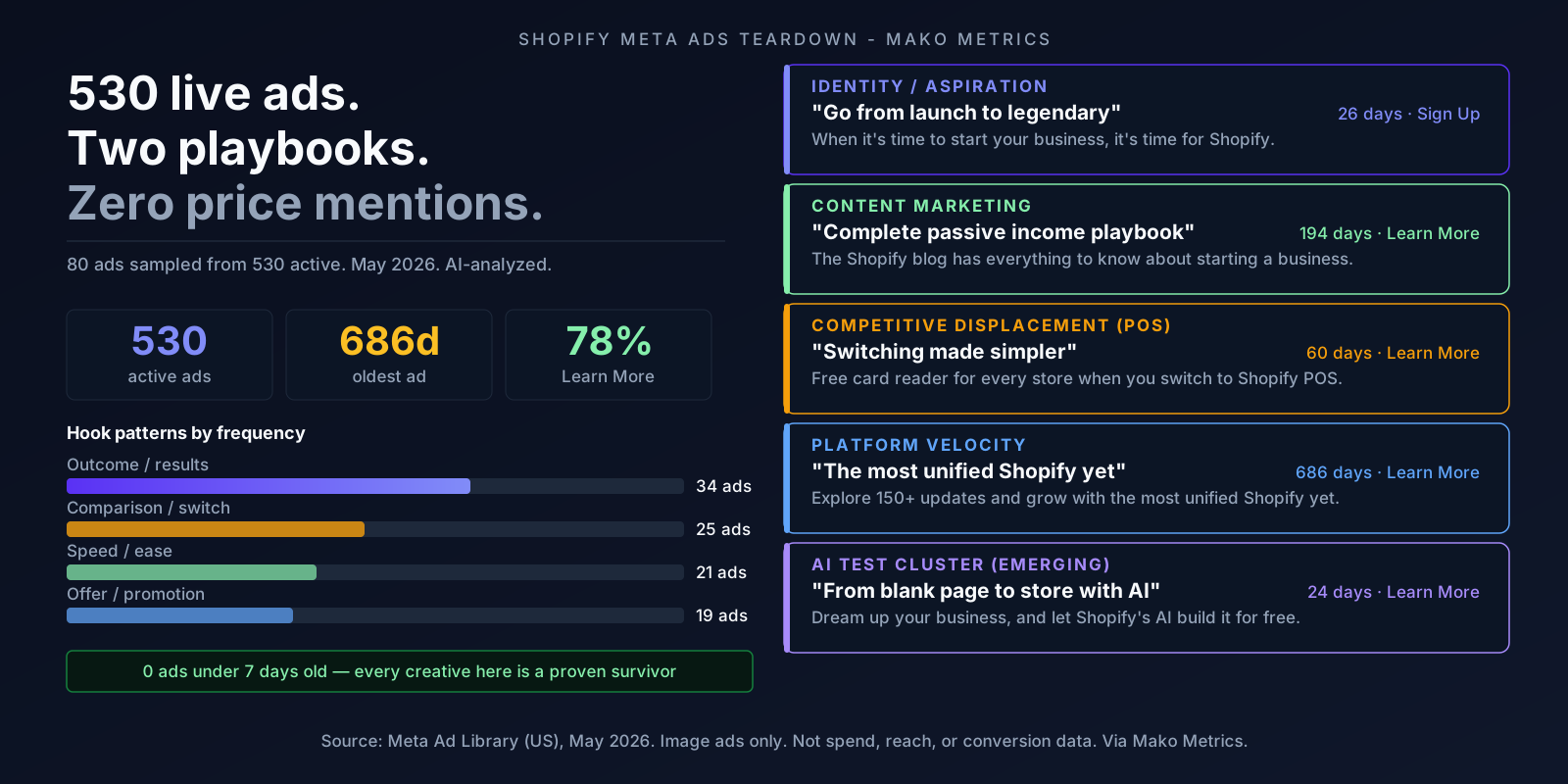
- 530 total active Meta ads: one of the largest image ad operations in e-commerce
- Oldest ad still running: 686 days (nearly 2 years)
- 78% of ads use "Learn More": content marketing is their primary acquisition channel
- Two completely separate playbooks: free-trial acquisition vs. POS switching
- Zero mention of price, transaction fees, or plan tiers across all 80 ads
- Competitors (Squarespace, BigCommerce, Wix) have minimal-to-zero image ad presence on Meta
By the Numbers
| Metric | Value |
|---|---|
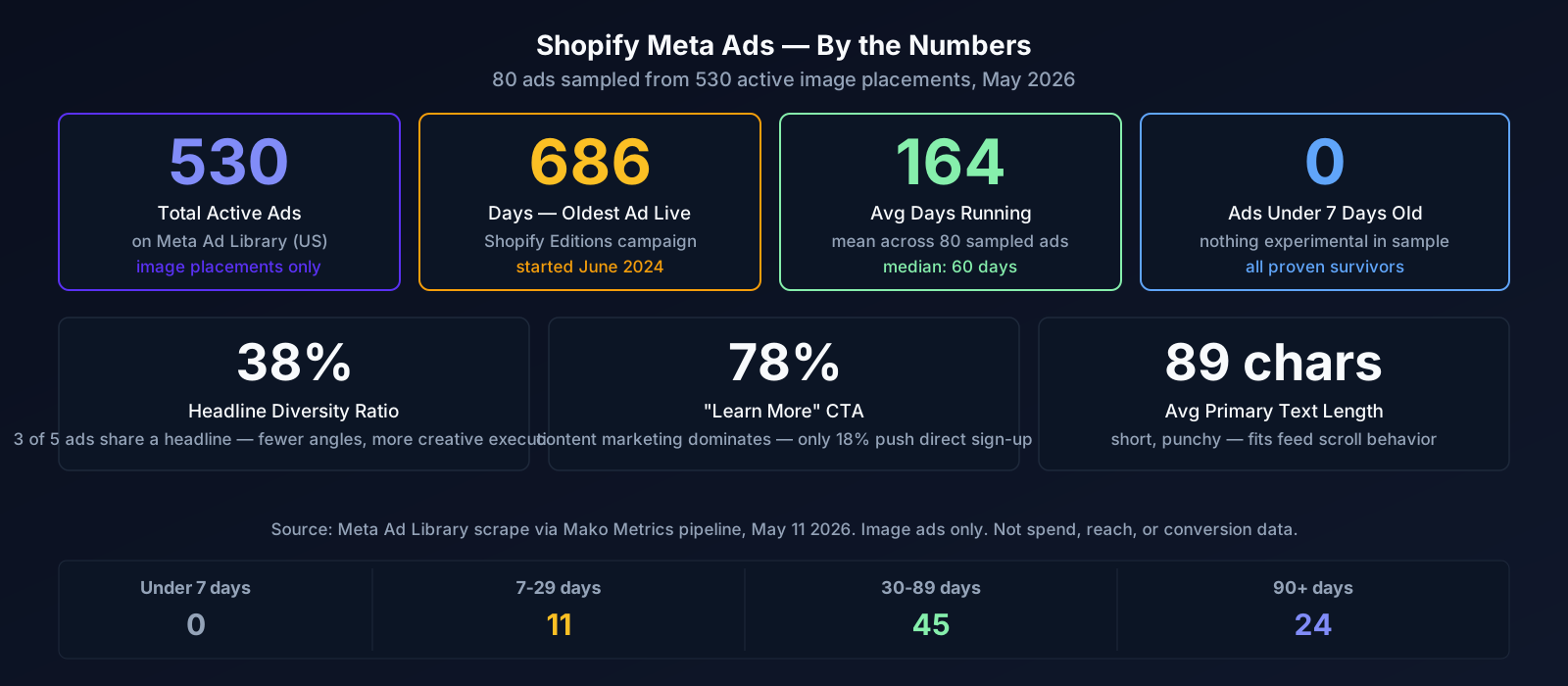
| Total active ads (Meta Ad Library) | 530 |
| Ads in our sample | 80 |
| Headline diversity ratio | 38% |
| Average days running | 164 days |
| Median days running | 60 days |
| Oldest ad still live | 686 days (June 2024) |
| Ads under 7 days old | 0 |
A few things immediately stand out.
530 active image ads is a massive operation. Most DTC brands run 10–30 active creatives. Shopify is running 17× that. At that scale the word for it stops being A/B testing: this is systematic creative flooding across every funnel stage and audience segment simultaneously.
Headline diversity at 38% means roughly 3 out of 5 ads share a headline with at least one other ad in the sample. Shopify is taking 30 core messages and testing each across many creative executions, rather than writing hundreds of unique angles. Same copy, different images.
Nothing under 7 days old. This is telling. Shopify isn't running burst campaigns or flash tests. Every ad in this sample has survived at least a week of delivery. Bad ads are killed fast; what you see here is what's working.
The Two-Speed Strategy
The most important structural insight in this dataset: Shopify runs two completely separate advertising playbooks simultaneously, and they almost never overlap.
Playbook A: Free Trial Acquisition
CTA: Sign Up | Copy style: Short, punchy, identity-driven | Ads: ~18% of sample
These ads sell the idea of starting a business. Short primary text (usually one sentence), big aspirational headline, "Start your free trial" or "Start a store for free" as the hook. No features named. No price mentioned. Pure identity play for pre-entrepreneurs who haven't committed yet.
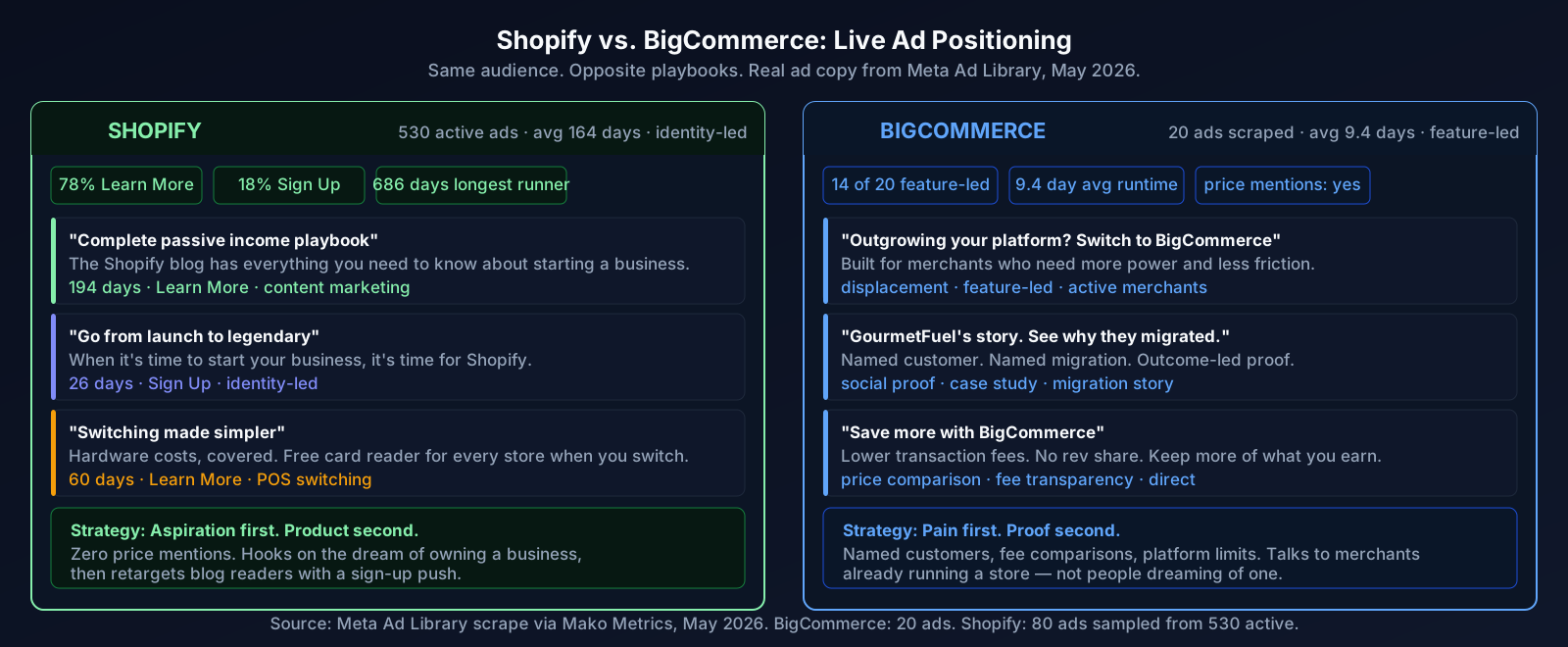
Example: "When it's time to start your business, it's time for Shopify."
Playbook B: Content Marketing Acquisition
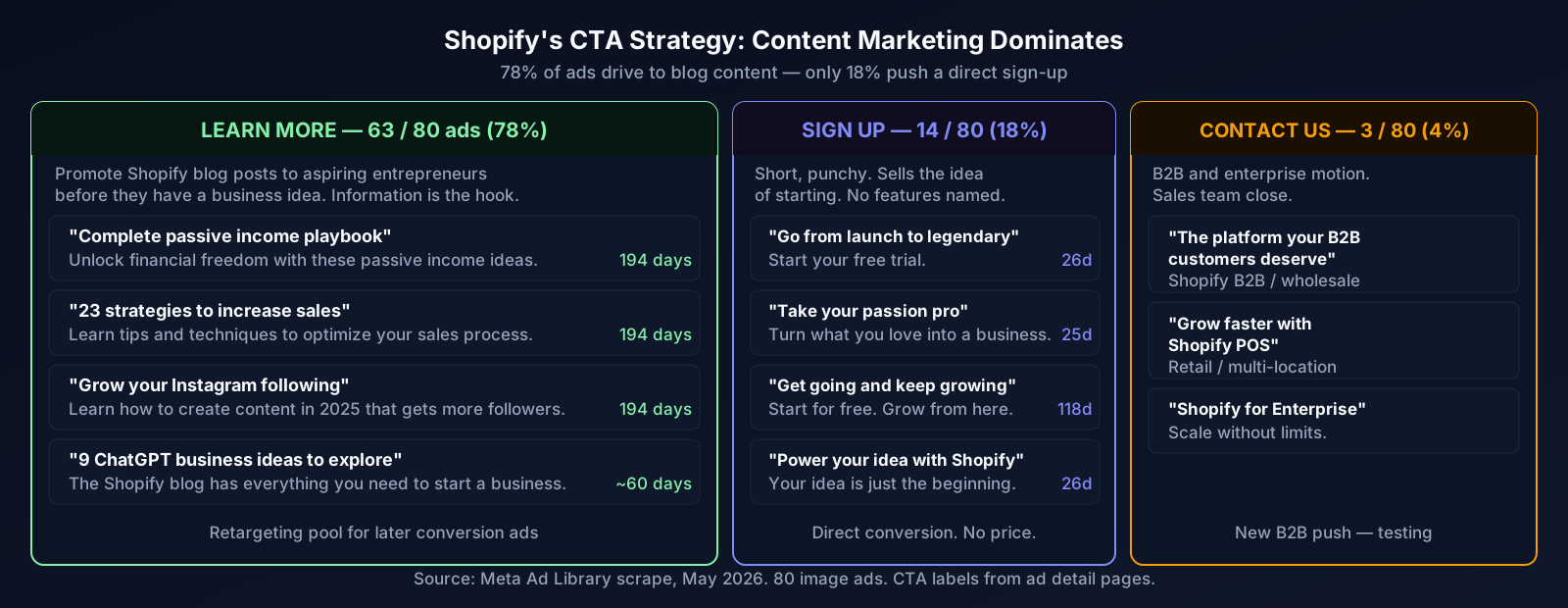
CTA: Learn More | Copy style: Long-form value lead, blog content | Ads: ~78% of sample
These ads promote Shopify blog posts instead of the platform: passive income guides, Instagram growth tactics, ChatGPT business ideas, sales strategy roundups. The CTA is Learn More. The offer is information. Shopify is buying attention from aspiring entrepreneurs before they even know they need a platform.
Example: "Complete passive income playbook — Unlock financial freedom with these passive income ideas." (Running for 194 days.)
This split is strategic, not accidental. Content marketing ads build brand association at the top of the funnel at lower CPMs; conversion ads close the deal once intent is established. The "Learn More" audience likely gets retargeted with "Sign Up" ads later.
78% of Ads Don't Mention Shopify
The majority of Shopify's Meta ads promote blog posts, not the product. The CTA is "Learn More." The destination is Shopify editorial content: a passive income guide, a sales strategy roundup, a ChatGPT business ideas list. The free trial page doesn't appear until you're already in the retargeting funnel.
Examples from the Ad Library:
- "23 strategies to increase sales" — 194 days, Learn More
- "Complete passive income playbook" — 194 days, Learn More
- "Grow your Instagram following" — 194 days, Learn More
- "9 ChatGPT business ideas to explore" — Learn More
- "AI design tools for small business" — 24 days, Learn More
Four of these launched on the same day, October 29, 2025, and are still live six months later. That's not an experiment. The logic: anyone who reads a Shopify guide on passive income is now a warm audience for a free trial ad. Shopify is buying attention from pre-entrepreneurs before any competitor enters the picture.
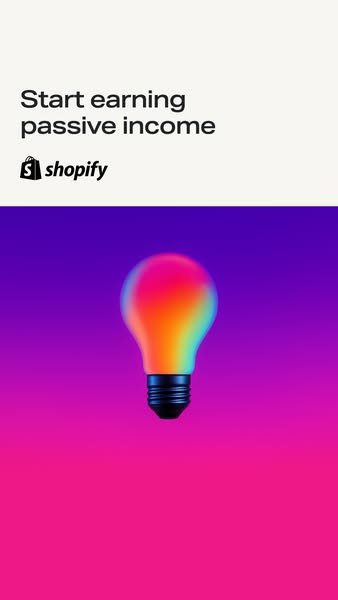
Most brands pull content ads after 30 days because they feel stale. Shopify's data argues otherwise: informational blog promotion ads have lower creative fatigue than conversion ads. If you have a high-value piece of editorial content, it may be worth running it as a paid placement longer than feels comfortable.
The Identity Play
The other major creative strand sells the idea of becoming an entrepreneur.
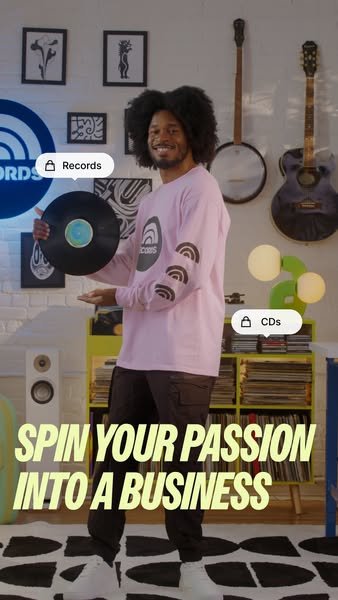
"Go from launch to legendary." "Take your passion pro." "When it's time to start your business, it's time for Shopify." These are identity ads. The copy positions starting a business as a threshold you cross, with Shopify as the platform you use when you do. No features. No pricing. Just the arc from where you are to where you want to be.
Identity copy examples (Sign Up CTA):
- "Go from launch to legendary" — 26 days
- "Get going and keep growing" — 118 days
- "Take your passion pro with Shopify"
- "Power your idea with Shopify"
- "When it's time to start your business, it's time for Shopify"
The goal is to become the default answer the way Kleenex became the default answer for tissues, which skips the feature comparison against Squarespace or BigCommerce entirely. If the aspiring entrepreneur's mental shorthand is "when I start a business, I use Shopify," the competitor comparison never happens.
The POS Conquest Campaign
Running parallel to the top-of-funnel content work is a completely separate campaign targeting merchants who already have a store. Specifically: brick-and-mortar operators on Square, Lightspeed, and similar POS systems.
This is the most operationally precise cluster in the dataset. The ads name switching friction directly and remove each piece of it:
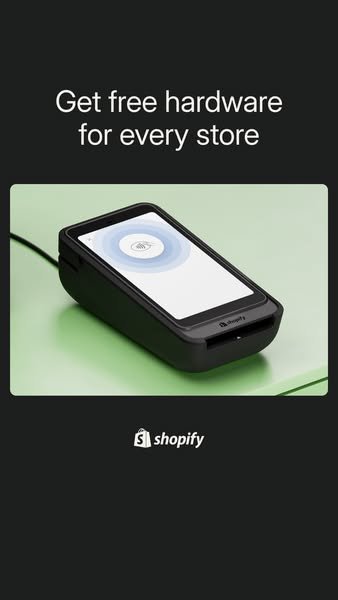
- "Switching made simpler | Hardware costs, covered. Get a free card reader for every store when you switch to Shopify POS." (60 days, Library ID 779369611498744)
- "Everything you need to switch | Skip the stress and get everything you need to switch to Shopify POS." (Library ID 1163684659084503)
- "Get help every step of the way. Shopify POS makes it easier to switch with dedicated support that's free." (Library ID 1460285229108383)
"Free card reader for every store" is doing specific work. Multi-location operators have a per-store cost objection; this addresses it exactly. It's a high-LTV segment, and the offer is calibrated for that math.
There's also a subtler displacement ad in the content cluster: a post promoting the Shopify Buy Button that explicitly names competitors in its description: "Use the Shopify Buy Button to turn any website into an online store, whether it's built on WordPress, Squarespace, Wix, or somewhere else." Not a switching ad. A compatibility ad that positions Shopify as an add-on to whatever the merchant already uses.
The 686-Day Ad
The oldest ad in the sample launched in June 2024. It's still running.
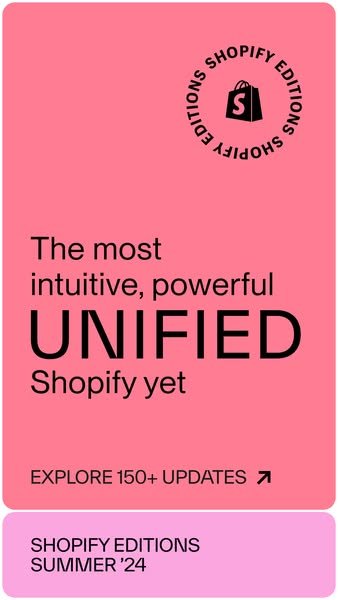
It promotes Shopify Editions Summer '24, a release announcement for 150+ product updates. At the time of this scrape it has been live for 686 days. That's not a forgotten campaign. At Shopify's scale, every ad is actively managed. This one keeps running because it keeps earning.
- "Shopify Editions is back | The Summer '24 Edition is here. Explore 150+ new product updates." (Library ID 2007420656349244)
- "The most unified Shopify yet | Explore 150+ updates and grow your business." (Library ID 384892057926599)
- "150+ updates to build, sell, and scale with the most unified Shopify yet." (Library ID 1142442500423985)
What this ad is actually doing is answering a fear that exists in every platform evaluation: stagnation. "Is this vendor still investing? Will they keep up with what I need in two years?" The Editions campaign answers that question without being asked. And because that anxiety is evergreen. Someone is always mid-evaluation, and the ad earns its spend every month.
The AI Test Cluster
Two recent ads are testing AI-led positioning:
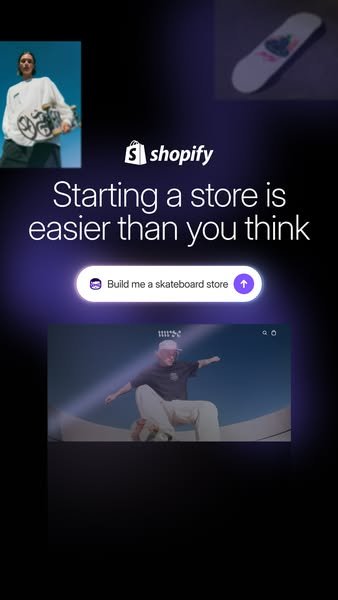
- "From blank page to store with AI | Dream up your business, and let Shopify's AI build it." (25 days, Library ID 2103417306899128)
- "AI design tools for small business | Start for free" (24 days, Library ID 1664280864771951)
Both launched recently. At 24-25 days old in a library where the working core runs 30-89 days and proven winners run 194+, these are tests, not established creative. Shopify is checking whether AI-led messaging converts better than the legacy free-trial hook.
If these are still live in 60 days, something shifted.
The Offer Architecture
Shopify runs two structurally distinct offer frameworks, and neither involves price.
The platform ads run on one offer: pure low-friction access. "Start your free trial." "Start a store for free." No plan tiers, no price anchoring, no feature comparison tables. The trial closes the deal, not the ad.
The POS switching ads run a different offer entirely. Tangible hardware incentive ("free card reader for every store"), explicit risk removal ("skip the stress"), a cost argument ("Shopify POS costs less"). Still no urgency language, no countdown, no "limited time." The volume of POS variants suggests they're winning through message repetition and specific objection removal, not scarcity mechanics.
Across all 80 ads: no price, no transaction fees, no plan names, no app store requirements, no total cost of ownership. The cost conversation stays out of the ad layer entirely.
How Long Ads Run and What It Signals
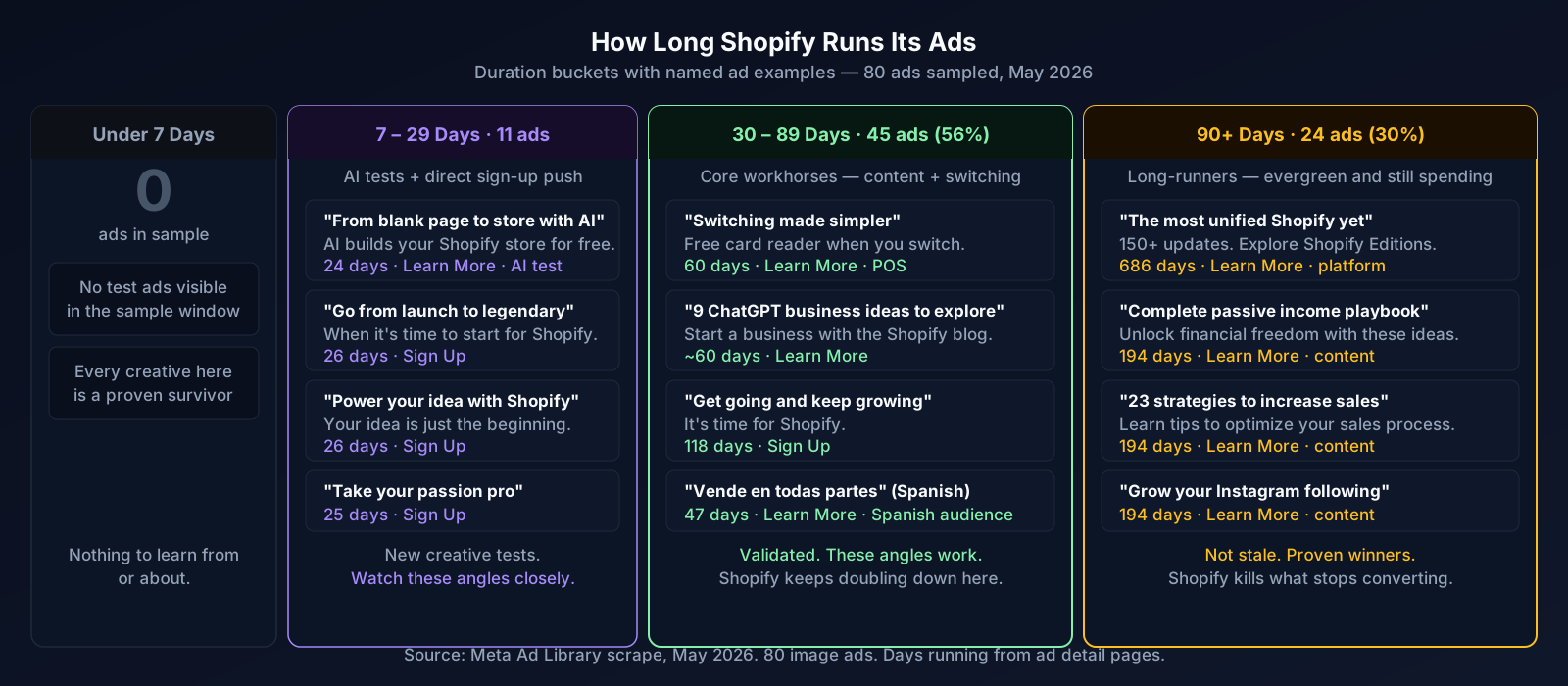
| Duration | Count | What it means |
|---|---|---|
| Under 7 days | 0 | All survivors; nothing experimental |
| 7–29 days | 11 | Recent launches still proving out |
| 30–89 days | 45 | The working core: proven but still testing scale |
| 90+ days | 24 | Established winners, likely highest spend |
The 90+ day cohort is where the real signal is. The Editions campaign (686 days) and the October content batch (194 days) have proven they earn their media spend month after month. Long-running ads are validated ads. We chased that pattern across ecommerce in the longest-running ecommerce Meta ad creative, and the flip side, knowing when a competitor's winner is finally decaying, is covered in how to spot competitor ad fatigue.
The insight for your own creative: If you're pulling ads after 30 days because they "feel old," you're making the same mistake most brands make. Shopify lets performance data, not gut feeling, determine creative retirement. An ad that has run for 194 days is an ad that keeps working.
What Shopify Deliberately Avoids
These are the angles Shopify's ads are conspicuously silent on, despite them being real, known vulnerabilities:
- Transaction fees: Shopify charges 0.6–2% on non-Shopify Payments transactions, scaling down as the plan price goes up (Shopify pricing: 2% on Basic, 1% on Grow, 0.6% on Advanced). Zero ads mention fees.
- App dependency: Matching what some all-in-one platforms include natively means adding paid apps on top of the plan price. Never mentioned.
- Total cost of ownership: the $39/month entry plan (Shopify pricing) looks cheap until you add apps, fees, and payment processing. Not in a single ad.
- Specific merchant outcomes: Every ad says "millions of businesses" but zero ads name a real merchant with a specific revenue number.
Read that as a deliberate choice to keep the cost conversation out of the ad layer and let the free trial absorb it.
What Competitors Are (and Aren't) Doing
We ran our scraper against Squarespace, BigCommerce, and Wix using the same methodology. The results reveal a stark gap:
| Platform | Active Image Ads (Meta) | Avg Days Running | Primary Strategy |
|---|---|---|---|
| Shopify | 530+ | 164 days | Content marketing + identity |
| BigCommerce | ~20 | 9.4 days | Feature-led + demo CTAs |
| Squarespace | 0 image ads | — | Video/TV-first (Super Bowl campaigns) |
| Wix | 0 image ads | — | Video-first on Meta |
BigCommerce: The Opposite Approach
BigCommerce is the most instructive contrast. They're running ~20 image ads (26× fewer than Shopify), and their ads barely survive a week (avg 9.4 days vs. Shopify's 164). But what they're saying is completely different:
- Feature-led (14 of 20 ads): "5 Signs It's Time to Scale — See the warning signs", "All payments, one place — Talk to an expert", "Convert higher and grow bigger — Try BigCommerce"
- Named customer story: "GourmetFuel's story. See why they migrated." Appearing in 6 ads. This is exactly the merchant-specific proof Shopify is conspicuously missing.
- Direct cost angle: "Save more with BigCommerce. Get started today." A direct price challenge Shopify never makes.
- Pain-point lead: "Outgrowing your platform? Switch to BigCommerce" Explicitly targeting merchants who've hit Shopify's growth ceiling.
- Demo CTA: "Request Time" appears 6 times, signaling a B2B/enterprise motion with a sales team close, not a self-serve free trial.
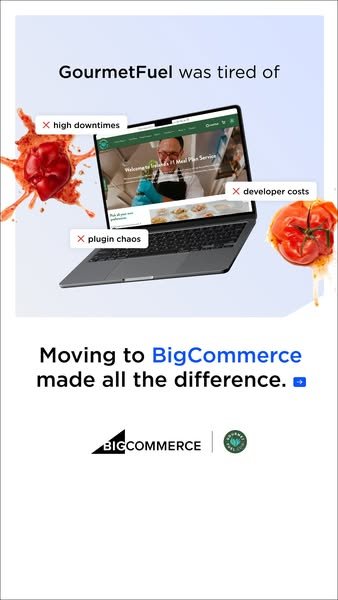
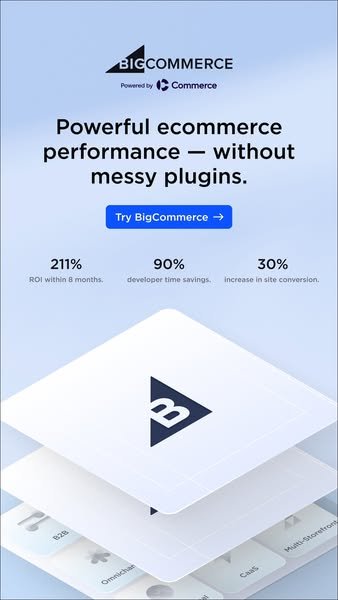
BigCommerce is doing several things the AI analysis flagged as Shopify's gaps (named outcomes, cost transparency, switching pain-point). They're just doing it with 26× less volume and far shorter creative lifespans.
Squarespace and Wix: Video-First, Not Absent
Squarespace runs zero image ads but is famous for cinematic video campaigns (they've run Super Bowl spots). Wix is a heavy Meta advertiser, but video-led. The image feed is simply not their format.
The takeaway: In the Meta image feed specifically, Shopify has no serious competition. For any e-commerce brand or SaaS competing in this space, the image feed is less crowded than it looks. If you want to pull this data yourself, here are 7 free ways to spy on competitor Facebook ads.
We have run the same teardown on other categories: Stripe in payments, Gusto against Rippling and Paylocity in HR software, Verizon in telecom, and Olipop in DTC beverage. Reading two or three side by side is the fastest way to see which patterns are category-specific and which are just how Meta rewards creative.
The Messaging Gaps: What to Counter
Our AI analysis identified four specific vulnerabilities in Shopify's current ad strategy: angles they're not covering that a competitor or adjacent brand could own.
Gap 1: Total cost transparency
Shopify's transaction fees are a known merchant pain point. No competitor is running a direct cost-transparency campaign against them. A "what Shopify actually costs at $5K/month revenue" calculator campaign (plan cost + transaction fees + apps + payment processing) would hit a real objection Shopify is deliberately leaving unaddressed.
Gap 2: Specific merchant success stories
Every Shopify ad uses scale as proof ("millions of businesses") but zero name a real merchant with a specific outcome. A competitor running "Sarah grew from $80K to $340K in 14 months, not because of millions of other stores, but because of one decision" would win the emotional specificity battle.
Gap 3: Data migration / switching anxiety
The POS switching ads address hardware cost and support, but never touch the real fear: losing historical sales data, customer records, and loyalty program history. A campaign that directly names and defuses the data migration objection could outperform Shopify's "skip the stress" framing.
Gap 4: The app dependency objection
"The most unified Shopify yet" is an admission that fragmentation has been a problem. Any platform with native features running "stop paying for 7 apps to do what one platform should" is directly exploiting the wound Shopify is trying to patch with the Editions campaign.
What to Steal
Even if you're not competing with Shopify, there's structural insight here that applies to most e-commerce ad programs. For a deeper look at how to apply this kind of analysis to your own category, see how to reverse-engineer competitor targeting from their Meta ads.
1. Run blog posts as paid ads
Shopify's content marketing ads have a 194-day track record. The offer is information, not product, which means lower creative fatigue, lower CPM friction, and a warm retargeting pool. If you have a content asset, test promoting it with a "Learn More" CTA before the "Buy Now."
2. Let performance determine creative retirement
Nothing in Shopify's active sample is under 7 days old. Their oldest ad is 686 days. Stop killing ads that "feel old." Kill ads with bad numbers. Give new creative at least 30 days of data before making decisions.
3. Build a switching campaign for incumbent competitors
The POS switching cluster is a clinic in conquest advertising: name the problem (hardware cost), remove the friction (free card reader), promise the support. If you have a segment of potential customers currently on a competitor, a targeted switching campaign with a tangible incentive will outperform a generic "we're better" ad.
4. Keep cost out of the ad layer
Shopify's refusal to mention price at the ad level keeps the first interaction about identity and value, not dollars. Price only enters the conversation when someone is already sold on the idea. If your product can withstand a free trial or demo, lead with the trial, not the price.
5. Use your release cadence as an ad asset
The Editions campaign has been running for 686 days. If you ship product updates regularly, each release is a new creative hook. Merchants who worry about platform stagnation are in every market. "150+ updates this year" is a competitive moat statement dressed as a product announcement.
The Bottom Line
Five hundred and thirty ads, and not one of them mentions what Shopify costs.
That's the whole strategy. Build the largest content marketing operation in e-commerce, get aspiring entrepreneurs into the retargeting pool before they know they need a platform, close them with identity-driven free trial ads, and keep cost entirely out of the conversation until they're already inside the product. The POS switching campaign runs on its own track, targeting a different persona with different objections.
The gaps this leaves are wide and undefended. No competitor is running a cost-transparency campaign against Shopify's transaction fees. Nobody is naming a real merchant with a specific revenue outcome. The data migration fear (the thing that actually stops POS switching) isn't being addressed by anyone. For a brand willing to own one of those angles, the Meta image feed right now is about as uncontested as it gets.
Want this kind of teardown for your actual competitor, the brand taking market share from your specific category? Mako Metrics produces competitor ad intelligence reports built from live Meta Ad Library data, with AI analysis of hook patterns, offer architecture, and counter-positioning. See a sample report or start with the Competitor Snapshot at $24.99.
Analysis conducted May 2026 from Shopify's Meta Ad Library page, country set to ALL. Meta Ad Library data is directional: it reflects image-backed placements visible in the public library sorted by total impressions. It does not include spend, reach, conversion data, or video-only placements.